What Is the Importance of Communication Skills?
Published: January 20, 2026
Last Updated: May 18, 2026

The importance of communication skills is often underestimated, yet it shapes careers, relationships and everyday outcomes.
Careers grow or stall, relationships strengthen or weaken, interviews succeed or fail, not because of what people know, but because of how effectively they communicate it.
In today’s world, where conversations happen across screens, cultures and hierarchies, communication skills have become the lifeline; be it for personal or professional conversations.
This blog explores what communication skills really mean, why they are needed, their real-world importance and how they shape interview outcomes and everyday life.
 The typical textbook defines Communication Skills as the ability to express thoughts, ideas and emotions clearly while also understanding others accurately. This includes speaking, listening, writing, body language, tone and emotional awareness.
Effective communication is not about talking more or using complex language. It is about clarity, intent and connection.
Strong communication skills help people:
In simple terms, communication skills decide whether messages get across or get lost.
So why do we need these communication skills? They exist because misunderstandings are costly.
In workplaces, poor communication leads to errors, delays, conflicts and disengagement.
Similarly, in personal life, it leads to frustration, resentment and broken relationships.
Even in interviews, capable candidates often fail simply because they cannot express themselves clearly.
The importance of communication in life is evident when:
People talk to each other but do not feel heard
Instructions are often misunderstood
Expectations are unclear
Feedback creates defensiveness instead of growth
Communication skills help bridge the gap between intention and interpretation.
Communication skills are important because they shape how others perceive, trust and remember people.
A few years ago, a manager shared a simple but telling experience.
 Two team members were equally competent, with the same qualifications and similar experience. When a senior stakeholder asked a tough question in a meeting, one answered calmly, structured their thoughts and explained their reasoning clearly. The other jumped to answer, but fumbled mid response, then overexplained and got defensive under pressure.
Senior leaders later described only one of them as “leadership material.”
Nothing magical happened in that room. No new knowledge surfaced. Only the way one person communicated changed how they were perceived.
No matter the role or industry, individuals are constantly evaluated on how they:
Every day, others silently assess people on these traits. Over time, these moments shape how trustworthy, capable and reliable others see them. This is why communication skills ultimately decide who gets heard, who gets trusted and who moves ahead.
Let us see each reason and how it impacts us in day-to-day life
In many meetings, some people hold back even when they have something valuable to say, simply because they are unsure how to phrase their point or how it will be received.
At the same time, a few people seem to steal the show. Are they more knowledgeable? Not always. They just know how to put their thoughts across. They express ideas simply, speak with certainty and avoid overexplaining.
Confidence grows not from knowing more, but from knowing how to communicate what you already know.
They say the first impression is the last impression and it is often true.
We instinctively warm up to the neatly dressed, well-groomed person who speaks with confidence and politeness. Not because they are smarter, but because their communication feels composed and respectful.
In contrast, someone who mumbles, stays silent, or comes across as arrogant can quickly turn people off, regardless of competence.
People form first impressions in seconds and communication plays a starring role in shaping them.
Leadership presence does not mean authority. It is how the leader communicates with their team.
Leaders who communicate clearly, stay calm under pressure and articulate direction confidently, naturally command attention. Those who are unclear, defensive or inconsistent struggle to inspire trust, no matter their position.
People follow clarity. That is why strong communication enhances leadership presence.
A colleague of mine was extremely hardworking, but she struggled to express how much effort she was putting in. From the outside, senior leaders assumed she was not doing enough, even though she was already stretched and close to burnout.
Over time, the gap between her effort and how it was perceived grew wider. Eventually, she quit.
Had she been able to communicate her work and impact clearly, the way some senior colleagues naturally do, the outcome might have been very different. Career growth often depends as much on how work is communicated as on the work itself.
In today’s dog-eat-dog world, everyone is trying to stay on top of their game, or at least appear that way. Even within the same team, people often end up competing with each other instead of working together.
The focus shifts to grabbing the best piece of work, proving individual worth and standing out for visibility or rewards. Slowly, collaboration fades. Information gets withheld, conversations dry up and the team atmosphere turns tense.
Then a new manager steps in. Instead of fuelling competition, they break the ice. They communicate sincerely, create space for open conversations and bring the team back to a shared goal. Gradually, people stop guarding information and start supporting each other. Collaboration replaces competition and the mood of the team changes.
Most workplace conflicts I have seen start with assumptions. We form opinions about others and then behave based on what we think they mean, not what they actually intend.
People read a message in the wrong tone. They take feedback personally and interpret silence as disagreement.. What could have been a simple conversation slowly turns into unnecessary tension.
I remember once telling a colleague, “Let us discuss this.” They assumed I was unhappy about something and began to worry and overthink. Until we actually spoke, the air between us felt heavy. Once they realised it was simply a discussion to understand a few things, they relaxed and the tension disappeared.
Clear and timely communication prevents these misunderstandings from growing. Had I clarified my intent upfront, all that unnecessary stress could have been avoided. When people speak openly, clarify intent and address issues early, conflict reduces before it has a chance to escalate.
Poor decisions rarely result from lack of intelligence. They are usually about lack of clarity.
In meetings, when people do not communicate clearly, key details get missed. Slowly assumptions replace facts, stronger voices dominate quieter ones and decisions get made on partial information. As a result, everyone wonders how it went wrong.
Clear communication changes this. When people articulate their points well, ask the right questions and listen fully, decisions become more balanced and informed. Better conversations lead to better choices.
In interviews, there are seldom right answers. Mostly the interview is steered by how clearly that answer is communicated.
A candidate may have handled a complex project, but when asked about it, they list responsibilities instead of explaining what they actually did and achieved. Another candidate with similar experience clearly explains the challenge, their role and the outcome.
The difference is not capability. It is communication. In interviews, how experience is communicated often decides who gets selected.
A friend does not call back. A family member sounds distant. A partner replies with a short “ok.”
Nothing is said, but a lot is assumed.
Questions start running in the head. “Did I say something wrong?” “Are they upset?” The distance grows, not because anyone intended it, but because no one spoke about it.
A simple conversation clears the air. When people communicate openly instead of guessing, relationships stay warmer and more honest.
People may forget the exact words you used, but they remember how you made them feel.
A calm explanation during a tense moment, a respectful disagreement, or a clear conversation when things were unclear stays with people long after. That is how impressions are formed and reputations are built.
Strong communication leaves a mark. Long after the conversation ends.
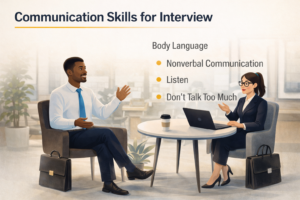 An interview is a conversation with consequences.
Interviewers are constantly observing how candidates explain their experience, structure their answers and respond under pressure. Someone may be doing excellent work, but if they struggle to articulate their role, impact, or learning, that capability often goes unnoticed.
Good communication helps candidates present their experience with clarity instead of confusion. It shows confidence without arrogance and honesty without defensiveness.
Interviewers remember how candidates communicated, not just what they said.
We often think that great communication skills mean using fancy words. In reality, they are about becoming clearer, calmer and more intentional in everyday conversations.
Start by listening fully before responding. Most people listen to reply, not to understand. When you slow down and truly listen, your responses become more relevant and confident.
Pay attention to how you structure what you say. A clear beginning, a focused point and a simple close make ideas easier to follow. This applies to meetings, interviews and even casual conversations.
Notice your tone and body language. Often, what you do not say communicates more than your words. Staying composed and present builds trust.
Finally, seek feedback. Ask trusted colleagues or friends how you come across and where you can improve. Communication improves with awareness and practice, not perfection.
Improving communication skills is a continuous process.
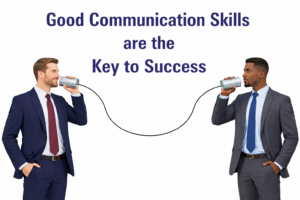 The importance of communication skills goes far beyond speaking well. Communication shapes how ideas are understood, how relationships are built and how opportunities unfold.
Strong communication skills bring experience to life in interviews.
At work, they build credibility and trust.
Beyond work, they create connection and clarity.
At The Yellow Spot, we believe communication is not about sounding impressive. It is about being effective, authentic and understood. When communication improves, outcomes improve naturally.
In the end, communication is not just a skill. It shapes outcomes.
If you would like to explore this further, we are happy to have a conversation.
📞 India: +91 99677 14310 / +91 87792 84314
📧 info@theyellowspot.com
