It is the ability to recognise, handle, and resolve disagreements in a way that protects relationships, maintains productivity, and drives better outcomes. In today’s workplaces, where diverse personalities, expectations, and pressures collide daily, what is conflict management is no longer an HR-only concept—it is a core leadership skill. Understanding conflict management, its meaning, and how conflict management works in real situations helps individuals and organisations move from tension and friction to clarity and collaboration.

Conflict management is not about eliminating disagreements. Conflict is inevitable wherever people work together. The real question is how conflict is managed—whether it escalates into resentment and disengagement or becomes an opportunity for learning, improvement, and stronger relationships. This blog explores what is conflict management, why it matters, the 5 conflict management styles, practical conflict management strategies, and realistic ways to manage conflict at work without damaging trust.
So, what is conflict management in simple terms?
Conflict management refers to the process of identifying, addressing, and resolving disagreements between individuals or groups in a constructive and respectful manner. The conflict management meaning goes beyond “fixing problems.” It involves understanding perspectives, managing emotions, and choosing the right response based on the situation.
In organisational settings, conflict in management often arises from:
Effective conflicts management ensures that disagreements do not derail performance or relationships. Instead, they are channelled into productive dialogue and informed decision-making.
Many people avoid conflict, believing it keeps peace. In reality, unmanaged conflict quietly erodes trust, morale, and productivity.
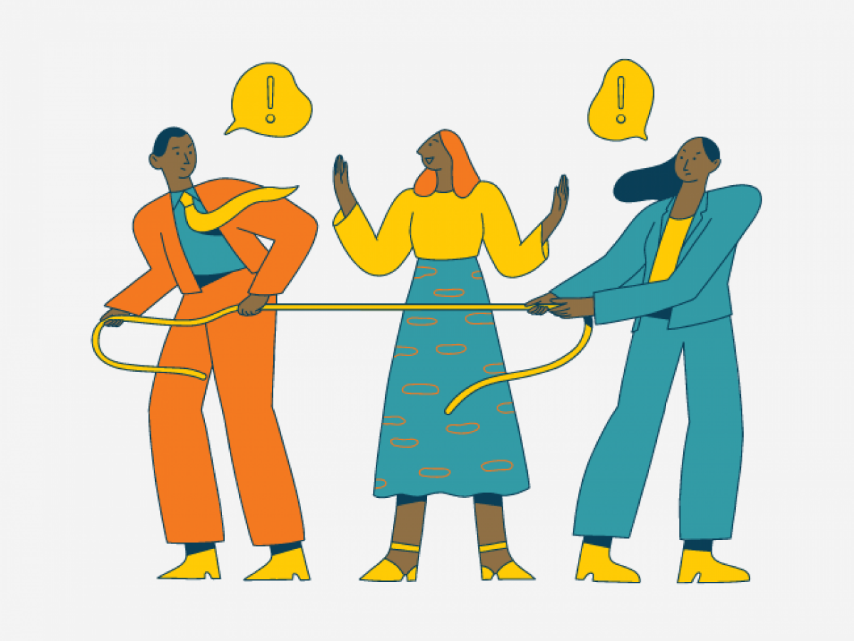
Conflict management matters because:
On the other hand, strong conflict management skills help organisations:
In leadership roles especially, the ability to manage conflict signals maturity, emotional intelligence, and fairness.
One of the most useful ways to understand conflict is through the 5 conflict management styles. Each style reflects a different approach to managing conflict, and no single style is always right or wrong.
The accommodating style prioritises the relationship over the issue.
People using this style:
This style works well when the issue is minor or when preserving the relationship is more important than winning the argument. However, overuse can lead to resentment and unspoken frustration.
 The avoiding style involves sidestepping the conflict entirely.
People using this style:
Avoiding can be useful when emotions are high and time is needed to cool down. But habitual avoidance allows problems to fester and often makes conflicts worse over time.
Collaborating is the most constructive of the conflict management styles.
This style focuses on:

Collaborating requires time, trust, and emotional maturity. It is ideal for complex issues where long-term relationships and outcomes matter.
The competing style prioritises one’s own position over others.
People using this style:
Competing can be effective in emergencies or when unpopular but necessary decisions must be made. However, overuse damages trust and discourages open dialogue.
Compromising sits between competing and collaborating.
This style involves:
Compromising is useful when time is limited and collaboration is not feasible. However, it may result in solutions that fully satisfy no one.
Understanding these conflict management styles helps leaders choose responses intentionally rather than reacting emotionally.
The 6 C’s of conflict management provide a practical framework for managing disagreements constructively.

In a mid-sized organisation, a manager felt a team member was “not proactive enough.” The employee, meanwhile, believed they were meeting expectations exactly as defined. The conflict escalated quietly until performance ratings suffered.
The real issue wasn’t attitude—it was unclear communication of expectations.
Effective conflict management communication involves:
Avoiding conversations to “keep peace” usually creates deeper conflict later.
Two department heads clashed repeatedly over resource allocation. Each defended their own priorities aggressively. When the conversation was reframed around shared organisational outcomes, the conflict shifted from “my budget vs yours” to “how do we jointly deliver results.”
Collaboration in conflict management means:
Conflict reduces when people feel they are on the same side of the problem, not opposite sides of the table.
A leadership team deadlocked over whether to push an aggressive deadline or protect team bandwidth. Collaboration wasn’t possible due to time constraints. Compromise allowed them to adjust scope while retaining the deadline—moving forward instead of stalling.
Compromise works best when:
The key is ensuring compromise doesn’t become habitual avoidance of deeper issues.
In a performance review discussion, a manager reacted defensively to feedback from a team member. The conversation shut down instantly—not because the feedback was wrong, but because the emotional reaction made it unsafe.
Control in conflict management means:
Leaders who demonstrate emotional control model psychological safety—even in disagreement.
In a project meeting, a senior leader publicly dismissed a junior colleague’s idea. The idea itself wasn’t the issue—the lack of civility was. Trust eroded, and participation dropped.
Civility in conflict management involves:
You can be firm and still be civil. The two are not opposites.
After a facilitated conflict discussion, two team members agreed on new ways of working. No follow-up occurred. Within weeks, old behaviours returned.
Commitment in conflict management requires:
Without commitment, conflict resolution becomes a talk shop—not a change mechanism.
Learning how to manage conflict effectively requires practice, self-awareness, and consistency.
Here are practical conflict management techniques that work in real workplaces:
Strong conflict management skills are built through repeated, conscious effort—not one-off interventions.
Often, the visible conflict is not the real problem. Clarify expectations, roles, and priorities before addressing behaviour.
A team complains about “attitude issues.” On exploration, the real issue is unclear roles and constant last-minute changes.
Strategy:
Managing conflict effectively starts with diagnosis, not assumptions.
People speak honestly only when they feel safe. Leaders must create environments where disagreement is not punished.
In teams where disagreement is penalised, conflict goes underground. It shows up as silence, disengagement, or passive resistance.
Strategy:
Psychological safety is a precondition, not a byproduct, of conflict resolution.
Unstructured conversations often spiral emotionally. Use clear agendas, neutral language, and shared objectives.
A meeting intended to “clear the air” turns into a blame session because no structure was set.
Strategy:
Structure contains emotion without suppressing it.
Shift conversations from “who caused this” to “what impact did this have and how do we fix it.”
A leader says, “I didn’t mean to demotivate you.” The employee responds, “But that’s how it landed.”
Strategy:
This keeps conversations factual and forward-looking.
Sometimes, a third-party facilitator or HR partner can help de-escalate and reframe discussions productively.
When power dynamics are involved—manager vs report—neutral facilitation helps balance the conversation.
Strategy:
Seeking help is a sign of responsibility, not failure.

So, what is conflict management really about?
It is about choosing progress over ego, dialogue over silence, and understanding over assumption. Conflict is not the enemy—unmanaged conflict is. When organisations and leaders invest in building conflict management skills, they create cultures where people feel heard, respected, and accountable.
Effective conflict management does not eliminate disagreement. It transforms it into clarity, learning, and better decision-making. In a world of constant pressure and change, the ability to manage conflict well may be one of the most underrated leadership advantages.
If you would like to explore this further, we are happy to have a conversation.
📞 India: +91 99677 14310 / +91 87792 84314
📧 info@theyellowspot.com


Blue Arch CHS, Louis School Lane, Four Bungalows, Andheri West, Mumbai – 400053