We all have heard about accountability and responsibility right from our childhood. It started with our parents and grandparents, teachers and professors and then from our seniors and colleagues at work. While we use these words loosely and interchangeably, both have very different meanings and roles in Management and our everyday lives.
Understanding the difference between responsibility and accountability is crucial for improving self, teamwork, leadership effectiveness, and organizational performance. When individuals, teams and leaders clearly understand this difference well then work becomes smoother, decisions are faster, and confusion is reduced.
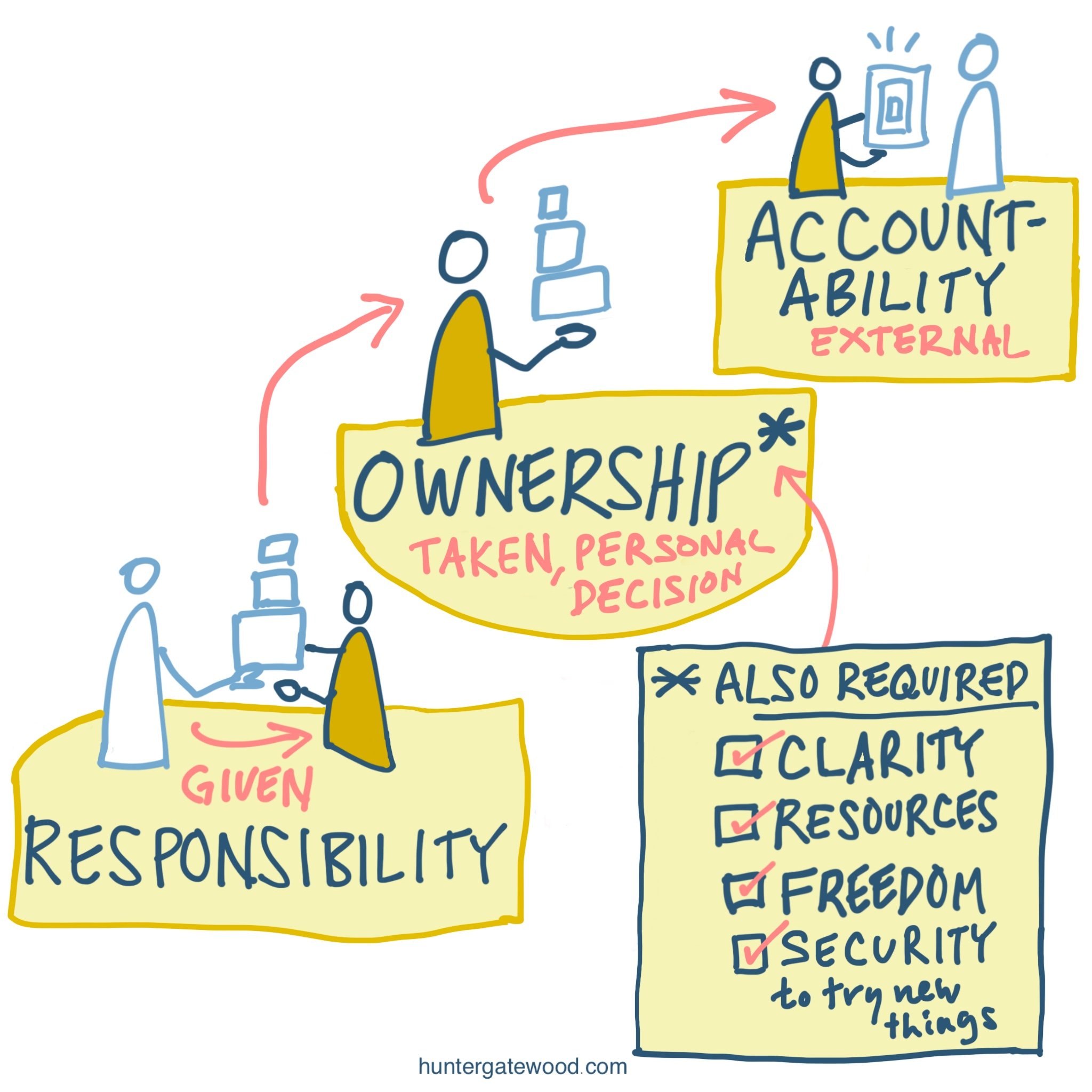
Responsibility usually refers to the tasks or duties assigned to someone, while accountability refers to owning the final outcome of those tasks. People in teams and groups may share responsibility for completing a piece of work, however only one person is usually accountable for the desired outcome.
In this blog let us explore this difference between these 2 important words, examine their definitions, understand their importance in the workplace, and look at a few examples which provides us with more clarity.
In simple words when someone is accountable, they are expected to ensure that the goals given to them are achieved and that tasks are completed successfully in the way they are expected to be completed. If the outcome of this task undertaken is positive, they own it. However if things go wrong, they must bear the consequences of the outcome.
Accountability usually involves:
Usually Leadership roles hold more accountability.
For example, a department head may assign various tasks to his/her team members. While team members are responsible for their individual tasks, the department head is overall accountable for the outcome and completion of these tasks as per the desired quantity, quality, time and resources.
In simple terms, accountability means owning the outcome, not just performing a task.
I believe Accountability plays an important role in Management. When individuals know they are accountable for results, they are more likely to take ownership of their work and ensure tasks are completed in a proper way.

Here are many reasons why accountability is more important at workplace.
Accountability fosters ownership of work and decision making. Instead of blaming external factors for the results, clear accountability leads individuals to focus on problem solving and achieving the desired outcomes.
When everyone understands who is accountable for which specific outcome, teams function much better and trust between members improves.
When accountability is clearly outlined, individuals can make their own decisions on the tasks assigned to them. It also helps in faster decision making.
When the final responsibility of a task rests on an individual, the chances of improvement increase. Since the person is directly accountable for the results and outcomes, they usually work towards improving the tasks at hand.
Individuals who have clear accountability are usually more transparent, responsible and outcome oriented.
When we want final outcomes then accountability is the king. Just doing a task is not important, the task fulfilling the purpose makes all the difference
Are you Responsible?
Responsibility means the focus is on the tasks and actions you are supposed to perform to get certain results.

Responsibilities usually include:
Responsibilities can be shared in between people at work. For example getting the needed data collated would be first person’s task. Putting it in order would be the second persons task. Analysing it would be the 3rd persons task. Submitting the report would be the task of the 4th person.
The overall accountability for submitting a precise, timely, analysed final report that shows the trends may lie with the manager.
Therefore, responsibility focuses on doing the task, while accountability focuses on ensuring the task leads to the desired outcome.
Responsibility helps organisations define what each team member needs to do. With clearly defined tasks there would be no chaos and confusion.
Let’s read the reasons below that bring out the importance of responsibility.
Every role has multiple tasks associated with it. Knowing the tasks they are supposed to perform gives employees clarity about what they are supposed to exactly do.
When tasks are clearly assigned, employees can focus on completing them efficiently as there is no confusion.
Responsibilities that are well distributed across members, encourage collaboration and coordination.
When specific responsibilities are given to each team member, by performing the same task again and again it enables precision, quality and expertise in performing that task.
Clear Responsibilities enable a clear structure that allows organizations to operate smoothly and achieve their goals.
Here are some key distinctions between Accountability vs Responsibility.
| Aspect | Responsibility | Accountability |
| Definition | Duties or tasks assigned to an individual | Ownership of the final outcome |
| Number of people | Multiple people can share responsibility | Usually only one person is accountable for the results |
| Focus | Completing the tasks | Achieving the outcomes |
| Authority | May or may not involve decision-making authority | Usually includes authority and ownership |
| Outcome | Performing the assigned duties | Being answerable for success or failure |
In simple terms:
This distinction is key to help organizations define roles and ensure projects are completed successfully and outcomes are achieved.
To better understand accountability vs responsibility examples, let us consider a workplace project.
A company is launching a marketing campaign for a new product.
Responsibilities include:
Each team member is responsible for completing a set of specific tasks related to the campaign.
However, the marketing manager is accountable for the campaign’s success. If the campaign does not achieve its targets like product awareness, lead generation, sales etc. the leadership will expect the marketing manager to explain the reasons for results and identify the necessary improvements.
This example highlights the difference between accountable and responsible roles in organizations.
Understanding responsibility and accountability in the workplace becomes easier when we examine a few practical scenarios.
Responsibilities:
Accountability:
Responsibilities:
Accountability:
Responsibilities:
Accountability:
Organizations that clearly define accountability vs responsibility matrix are able to operate more efficiently and can avoid confusion.
When responsibility and accountability are not clearly defined, multiple challenges arise:
Successful organizations address these challenges by clearly defining who is responsible for a particular task and for what outcome.
Many companies use tools such as the RACI framework, which stands for:
This framework helps teams clearly understand roles and prevents confusion in complex projects.
Managers play a key role in fostering both responsibility and accountability within teams.
Here are some practical strategies leaders can implement to be able to do so well.
Managers must ensure each team member understands their responsibilities clearly and the accountability for each outcome is well defined.
Employees should feel empowered to take initiative and accept responsibility for their work.
Managers should define measurable goals and outcomes so team members know what success looks like.
Open communication towards needed outcomes helps teams stay aligned and ensures accountability is maintained.
Recognizing employees who demonstrate responsibility and accountability fostyers an environment of a positive work culture.
Leaders who accept accountability for outcomes set very powerful example for their teams to also be able to do so.
Understanding accountability vs responsibility is essential for building effective teams and stronger organizations.
While responsibility primarily focuses on performing assigned tasks, accountability refers to owning the final results. Multiple individuals may share responsibility between themselves, however accountability usually rests with a single person who ensures the work done leads to successful outcomes.

When employees understand their responsibilities and leaders embrace accountability, organizations develop a culture of ownership, trust, continuous improvement and growth.
Ultimately, the balance between responsibility and accountability allows teams to move beyond just completing tasks to focussing on achieving meaningful results.


Blue Arch CHS, Louis School Lane, Four Bungalows, Andheri West, Mumbai – 400053