
Emotional Intelligence Training: The Skill That Changes Everything
Published: June 4, 2026
Last Updated: June 24, 2026

Rajeev was a brilliant engineer. He got promoted to a managers role at 32. Sharp, fast, decisive and completely work focussed.
Six months in the new role, three of his best team members had quietly resigned.
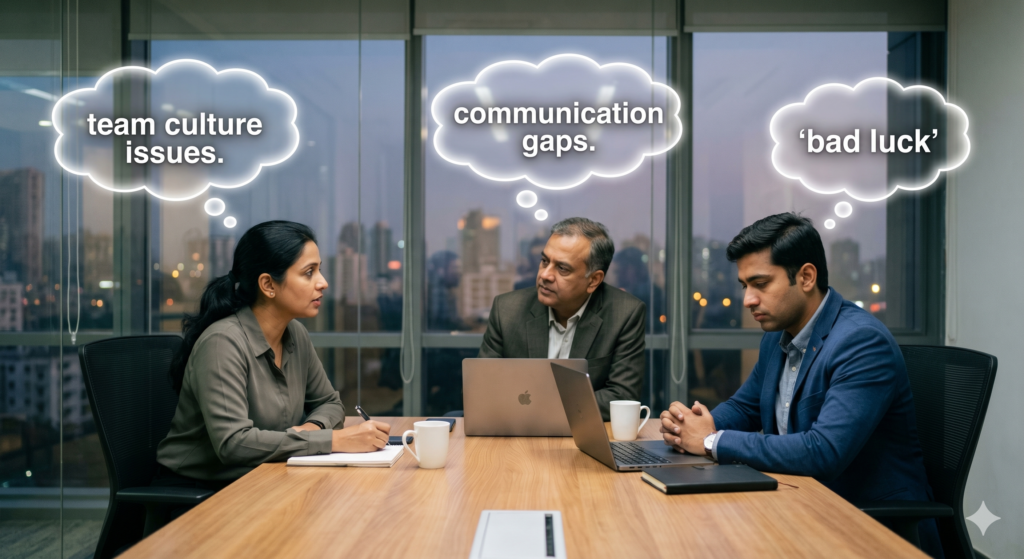
The HR of the company Shruti called it a ‘team culture issues.’ His boss Pramod called it as ‘communication gaps.’ Rajeev called it ‘bad luck’.
His coach Amit Tandon knew him very well and called it what it actually was. A complete absence of emotional intelligence.
Rajeev was not cruel. He was not incompetent, just simply had no idea how his words landed. One could sya he was blunt. He had no awareness about his tone and volume. Neither the ability to read what people needed before they said it out loud.
He had a very high IQ but a low EQ. And in today’s world this combination can derail even the most gifted professional.
This is not Rajeev’s story alone. It plays out in offices across the globe every single day.
Emotional Intelligence, commonly called Emotional Quotient or Emotional Intelligence is the ability to recognise, understand, manage, and effectively use emotions. Your own. And other people’s.
The term was first formally introduced by psychologists Peter Salovey and John Mayer in 1990. But it was Daniel Goleman who brought it to the world in his landmark 1995 book Emotional Intelligence: Why It Can Matter More Than IQ.

Goleman’s research across hundreds of organisations revealed something that shook the corporate world:
Technical skill and IQ account for only about 33% of what distinguishes top performers. The remaining 67% comes from emotional intelligence.
But here is the Good News. Emotional Intelligence is not a personality trait you are born with or without. It is a learnable skill. Like any muscle, it grows and can be grown more and more with the right training and consistent practice.
Daniel Goleman identified five core components of being Emotionally Intelligent. Understanding and internalising these is the foundation of any serious EI training programme.
1. Self-Awareness
Knowing what you feel, why you feel it, and how it affects your behaviour and decisions.
Example: Before walking into a difficult appraisal conversation, a self-aware manager notices they are anxious. It takes two minutes to breathe and centre themselves rather than walking in reactive.
2. Self-Management
The ability to manage disruptive emotions and impulses. To pause before you react.
Example: A client sends a hostile email. Instead of firing back immediately, you wait 30 minutes, reread it, and respond with clarity rather than heat.
3. Self-Motivation
An Internal drive that goes beyond money or title. We call it Resilience. The ability to stay committed to the hard work when things get hard.
Example: A sales professional who loses a major account doesn’t spiral. They analyse what went wrong and channel that energy into the next pitch.
4. Empathy
Understanding the emotional state of others. Not feeling sorry for them and sulking yourself understanding their feelings with them.
Example: A team lead notices a usually high-performing colleague has gone quiet. Instead of pushing for output, she checks in privately. One conversation saves a resignation.
5. Social Skills
The ability to manage relationships, influence people, navigate conflict, and build networks all while keeping the emotional temperature of the room in check.
Example: During a heated cross-functional meeting, one person consistently de-escalates and redirects to solutions. That person is not the most senior. But they are the most influential.
We live in an age of unprecedented stress, speed and complexity.
Artificial Intelligence is replacing a lot of technical tasks. Automation is rewriting job descriptions. The half-life of technical skills is shrinking every year.
What however cannot be automated, what no algorithm can replicate is the deeply human ability to read a room, hold space for someone’s grief, navigate a conflict with grace or inspire a team that has lost its confidence.
The data below backs this up:
90% of top performers have high emotional intelligence….TalentSmart research across 1 million people across the globe
Professionals with high Emotional Quotient earn significantly more than their low-EQ counterparts
Teams led by emotionally intelligent managers show 20% higher productivity and significantly lower attrition
In sales, EI is a stronger predictor of success than product knowledge or sales technique
At The Yellow Spot, we have seen this play out across 16+ years of working with organisations across India and internationally. The professionals who grow fastest are rarely the most technically brilliant. They are the ones who understand people.
Emotional intelligence is not reserved for therapy sessions or leadership offsites. It lives in the ordinary moments of every day.

Your partner says something sharp before you leave for work. Old response generally is to carry it into the office, snap at a colleague by 10am, wonder why the day went so bad.
Emotionally Intelligent response would be to name the emotion you are feeling, decide consciously not to carry it forward, and address it in the evening with your partner with a balanced head.

Old response is to stew silently, complain to others and build resentment and bitterness.
Emotionally Intelligent response would be to address it directly, calmly and specifically. ‘I noticed the presentation did not mention our team’s contribution. Can we align on how we represent this going forward?’

Old response is to match with their aggression fully or to fold completely.
EmotionalIy intelligent response is to stay regulated, acknowledge their frustration and steer toward solutions without losing your footing.

Old response is to avoid the conversation entirely or deliver it so bluntly that it triggers a shutdown.
EmotionalIy intelligent response is to lead with curiosity and not judgment. ‘Help me understand what was happening for you during that project.’ Listen first and then share your observation.
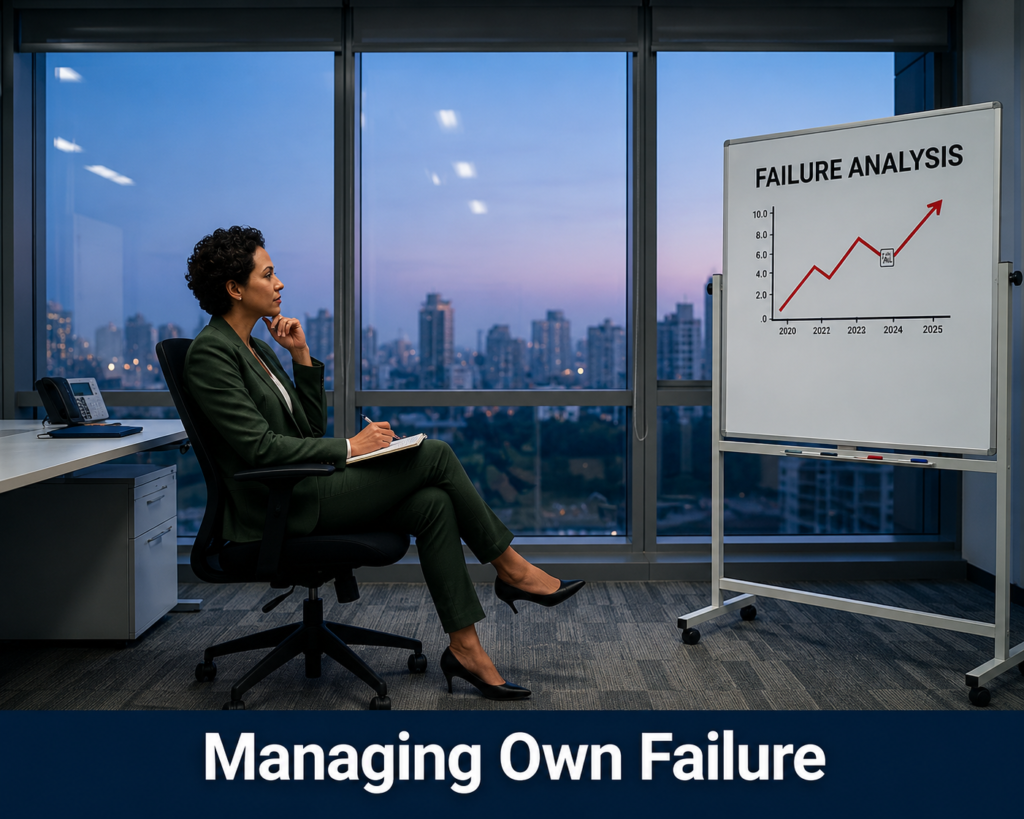
Old response ends in either catastrophise or deflect blame entirely on some else or fate.
EmotionalIy intelligent response would be to acknowledge what happened, separate the event from your identity, extract the learning and move forward.

Old response is to project false confidence or communicate anxiety that spreads through the team.
EmotionalIy intelligent response is to be honest about what is unknown, clear about what is within control and grounded in your belief in the team’s ability to navigate it.
You do not need a weekend retreat to build EI skills. You need five minutes of self-time a day and honest answers to the below three questions.
Do this at the end of every workday. In a journal, a notes app or simply in your head.
This builds self-awareness. Name the emotion precisely. Not just ‘stressed’. Was it anxious, frustrated, overwhelmed, embarrassed? Sometimes there are multiple emotions.
This builds self-regulation and reflection. No judgment. Just honest observation of one self.
This builds empathy. Think of one person. One moment. What were they actually communicating beyond their words? What were their facial gestures and body language telling yo?
Three questions. Five minutes. When done consistently with integrity this practice rewires how you show up.
Rate yourself honestly from 1 to 5.
1 = Rarely | 3 = Sometimes | 5 = Consistently
| Statement | Your Score |
| I can name what I am feeling in the moment — not just ‘fine’ or ‘stressed’ | /5 |
| I pause before reacting when I am angry or hurt | /5 |
| I recover from setbacks without prolonged negativity | /5 |
| I can tell when someone in a conversation is uncomfortable — even if they say nothing | /5 |
| I adjust how I communicate based on who I am speaking to | /5 |
| I can disagree with someone without it becoming personal | /5 |
| I ask for feedback and genuinely consider it | /5 |
| I stay motivated even when results are not immediately visible | /5 |
| I manage conflict directly rather than avoiding it or escalating it | /5 |
| People come to me when they need to be heard | /5 |
Your Score Interpretation:
40–50: Strong EI Foundation
You have strong EI foundations. Focus on depth and consistency.
28–39: Solid with Clear Growth Areas
Solid awareness with clear growth areas. Targeted practice will accelerate development significantly.
15–27: Deliberate Attention Needed
EI is an area that needs deliberate attention. The good news — you are already more aware than most people at this stage.
Below 15: The Real Work Begins Here
And it is absolutely possible. EI is learned. Not inherited.
For years, organisations treated EI as a ‘nice to have.’ A soft topic for HR workshops that nobody really applied.
That thinking is outdated and expensive in today’s world.
Unmanaged emotions cost organisations crores every year in form of attrition, in failed team dynamics, in lost client relationships, in leaders who were technically ready but humanly unprepared.
Emotional Intelligence training is now a core leadership competency — not a personality development add-on.
At The Yellow Spot, our Emotional Intelligence programmes are built on one core belief: insight without application is just information.
Every session is experiential. Every tool is immediately applicable. Participants leave not just knowing more about Emotional Intelligence, they leave with a personal practice, a clear gap map and a concrete 30-day action plan.
IQ gets you hired.
Technical skill gets you promoted.
Emotional intelligence determines how far you go — and how many people choose to come with you.
Rajeev, by the way, went through a structured programme on Emotional Intelligence eighteen months after his team fell apart. He is now one of the most sought-after leaders in his organisation. Not because he became softer. Because he became more aware. He could manage his own emotions better and also identify patterns in others to be able to manage them well.
That awareness of self, of others, of the emotional undercurrents and its management in every room is available to anyone willing to do the work.
The question is not whether you need it.
The question is when you decide to start.
The work has to be done within you and hence it cannot be delegated.
Mumbai-based boutique corporate training | 16+ years | Pan-India & International
