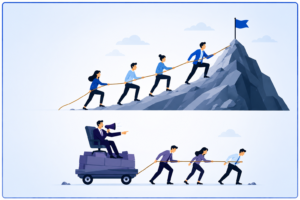
Leader vs Boss: Key Differences That Define Great Leadership
Introduction Think about the best manager you have ever worked with. Now think about the worst. Chances are, the difference wasn’t intelligence, experience, or technical
Strengthen execution, people skills and organisational impact with our leadership training programs.

-Harvard Business Review
-Gallup
-CEB Global
-Gallup
-Clear Company
Our facilitators bring first-hand experience as managers and leaders, grounding learning in real workplace realities.
We work on how leaders think, decide and translate intent into everyday action.
We help managers and leaders strengthen attitude, skills and behaviours to become more effective versions of themselves.
Programs are designed around participant realities, organisational priorities and the outcomes that matter.
Every intervention encourages practical action, reflection and visible shifts in behaviour.
From focused interventions to deep-impact journeys, programs are designed to match real organisational needs.
Leadership development delivered through focused programs and sustained learning journeys.
Strengthening the day-to-day leadership and people management skills needed to perform well at work.
Align and empower yourself and your team towards shared organisational goals.
Equip managers with essential skills to lead and manage teams effectively.
Equip managers with essential skills to lead and manage teams effectively.
Managers plan, organize and oversee tasks, teams and resources to achieve organizational goals. They play a crucial role in setting goals, making decisions, delegating responsibilities and ensuring efficient operations. Managers guide and support their teams to align their efforts with the organization’s vision and strategy.
Set them up for success in their new leadership role.
Set them up for success in their new leadership role.
First-time managers require a shift in mindset from being an individual contributor to becoming a confident leader. They need practical tools and strategies to effectively lead their teams, manage performance and handle the complexities of their new responsibilities, building competency and ensuring success in their role.
Equipping leaders to coach, mentor and develop their team members effectively.
Equipping leaders to coach, mentor and develop their team members effectively.
Managers and leaders play a critical role in developing people through everyday conversations. This program builds the mindset and skills needed to coach and mentor team members with clarity, empathy and intent. The focus is on enabling leaders to support growth, performance and ownership through practical coaching interactions at work.
Drive direction and motivation to achieve dreams and goals.
Drive direction and motivation to achieve dreams and goals.
Goal setting provides a clear roadmap for achieving both small aspirations and ambitious targets. It helps create specific, challenging goals which are broken into actionable steps and tracked over time. With competitive timelines and regular evaluations, it helps us stay on course.
Entrust tasks and responsibilities to optimize team performance.
Entrust tasks and responsibilities to optimize team performance.
Skilled delegators balance workloads, focus on strengths and empower their teams. They effectively identify tasks to delegate, match them with the right team members, provide clear instructions, build trust and monitor progress while empowering their team to take ownership and grow.
Unite, build synergy and drive optimal team performance.
Guide your team to achieve enhanced performance and success.
Guide your team to achieve enhanced performance and success.
Managing Performance is an ongoing process. It starts with setting goals and objectives, reviewing progress; providing training, coaching and feedback. These activities help managers keep their teams on track, address challenges and build trust with the team while developing their leadership skills.Elevate from a task executor to an empowering enabler.
Elevate from a task executor to an empowering enabler.
Supervisors must balance tasks while maintaining strong relationships with their superiors, team and customers. To succeed, they need to embrace their evolving role, adopt a proactive mindset and refine their leadership and task management skills.
Developing leaders to think strategically, navigate change and drive broader organisational impact.
Strengthening long-term thinking for better decisions and direction.
Strengthening long-term thinking for better decisions and direction.
Strategic thinking helps leaders step back from immediate pressures and see patterns, priorities, and possibilities more clearly. This program focuses on building perspective and judgement in situations where choices are not obvious. Leaders learn to think beyond tasks and respond to complexity with greater clarity and intent.
Helping leaders guide people through change with clarity and confidence.
Helping leaders guide people through change with clarity and confidence.
Change becomes difficult when leaders are unsure how to engage people through uncertainty. This program focuses on how leaders show up during change; through conversations, decisions and everyday actions. Participants build the capability to reduce resistance, create clarity and lead their teams through change more effectively.
Building alignment by managing key stakeholders effectively
Building alignment by managing key stakeholders effectively
Stakeholder dynamics shape outcomes more than most leaders realise. This program helps leaders reflect on how they engage others and the impact it creates. The emphasis is on building alignment and momentum through more intentional stakeholder interactions.
Great leaders are developed over time, not through a single intervention. Building leadership capability requires ongoing learning, practice, feedback and support.
Our leadership development journeys bring together multiple learning experiences that help leaders strengthen their influence, decision-making, people management and execution capabilities.
Each journey is designed around organisational goals, leadership expectations and business challenges to create meaningful and lasting impact.
A typical journey may include:
“Leadership is hard to define and good leadership even harder. But if you can get people to follow you to the ends of the earth, you are a great leader”
Indra Nooyi

Different leadership levels require different capabilities. Explore programs tailored to each stage of leadership.
Designed to strengthen strategic thinking, shape culture, lead change and drive organisational impact.
Helping managers elevate team performance, strengthen influence and lead with greater impact.
Equipping new managers with the mindset, skills and confidence needed to succeed in their role.

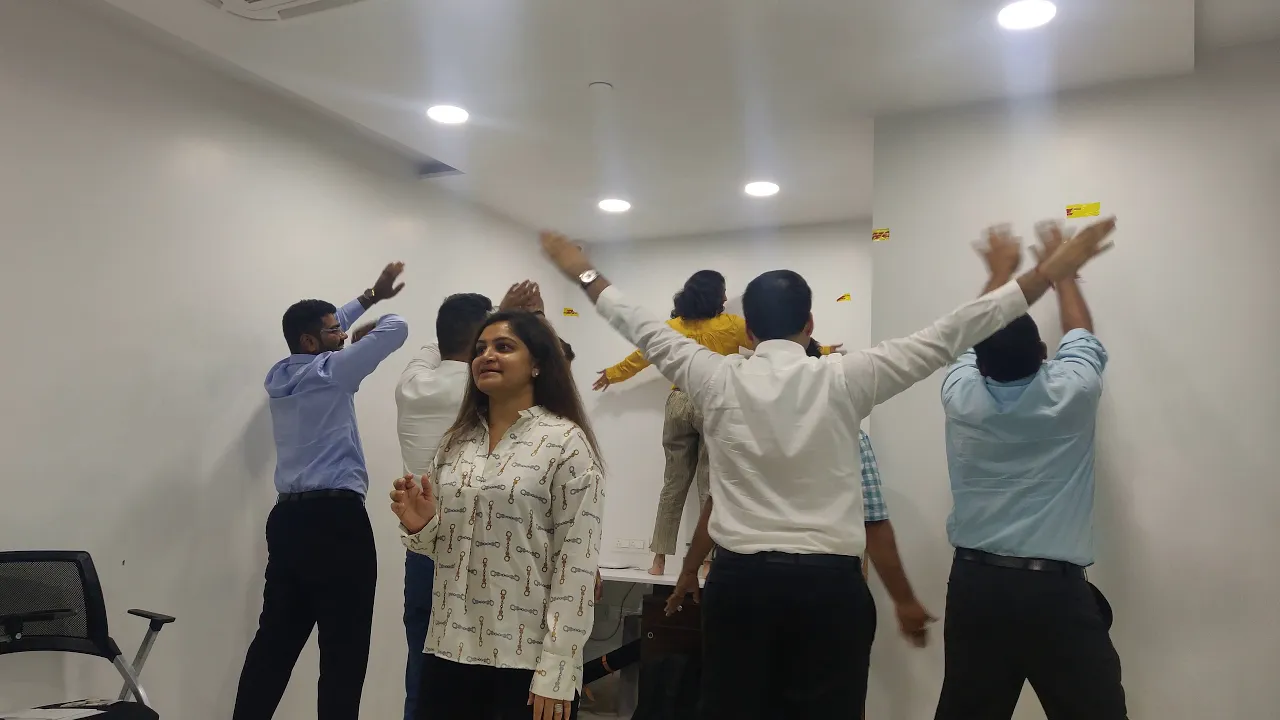
New managers participate in an interactive ball game that brings the role of a manager to life. The activity highlights effective delegation, coordination and responsibility-sharing to achieve team goals.


Explore practical insights, leadership strategies, and real workplace scenarios to help leaders lead with greater confidence and effectiveness. Introduction Think about the best manager you have ever worked with. Now think about the worst. Chances are, the difference wasn’t intelligence, experience, or technical

How many of you feel like you need a designation, a team or an office to be a leader? Well the truth is that anyone
Communication is at the heart of how humans connect, collaborate, and create outcomes. There are several types of communication skills training. Whether it is a
Organisations usually invest in leadership training during role transitions, phases of growth, changes in business direction or when leaders need to work more effectively across teams and stakeholders.
Leadership journeys are more suitable when organisations want sustained behavioural change, alignment across cohorts or development over time rather than one-time interventions.
In some cases, yes. However, leadership programs are most effective when designed around similar levels of role complexity and responsibility to enable meaningful peer learning.
Programs are designed around your organisational context, leadership challenges and realities on the ground. Content is adapted to ensure relevance rather than delivered as a fixed curriculum.
Impact is typically assessed through participant feedback, learning takeaways, and observed changes in behaviour at work. Where feasible, these insights are reviewed collaboratively to understand how leadership capability is strengthening on the ground.
We recommend in-person leadership training wherever possible, as it enables deeper dialogue, reflection and engagement. Online programs are used when participants are spread across locations and coming together is not feasible. In some cases, hybrid formats can also be designed to balance depth with logistical realities.
Most organisations start with a conversation to clarify leadership challenges and outcomes. Based on this, we recommend the most appropriate programs or journeys.