The 7 Effective Communication Skills At Work
Published: July 30, 2026
Last Updated: September 21, 2026

Research shows that 86% of workplace failures are caused by poor communication. Yet, ask most people to rate themselves as communicators and the majority will confidently say they are above average.
That raises an important question. If everyone thinks they communicate well, why do misunderstandings, conflicts and costly mistakes continue to happen at work?
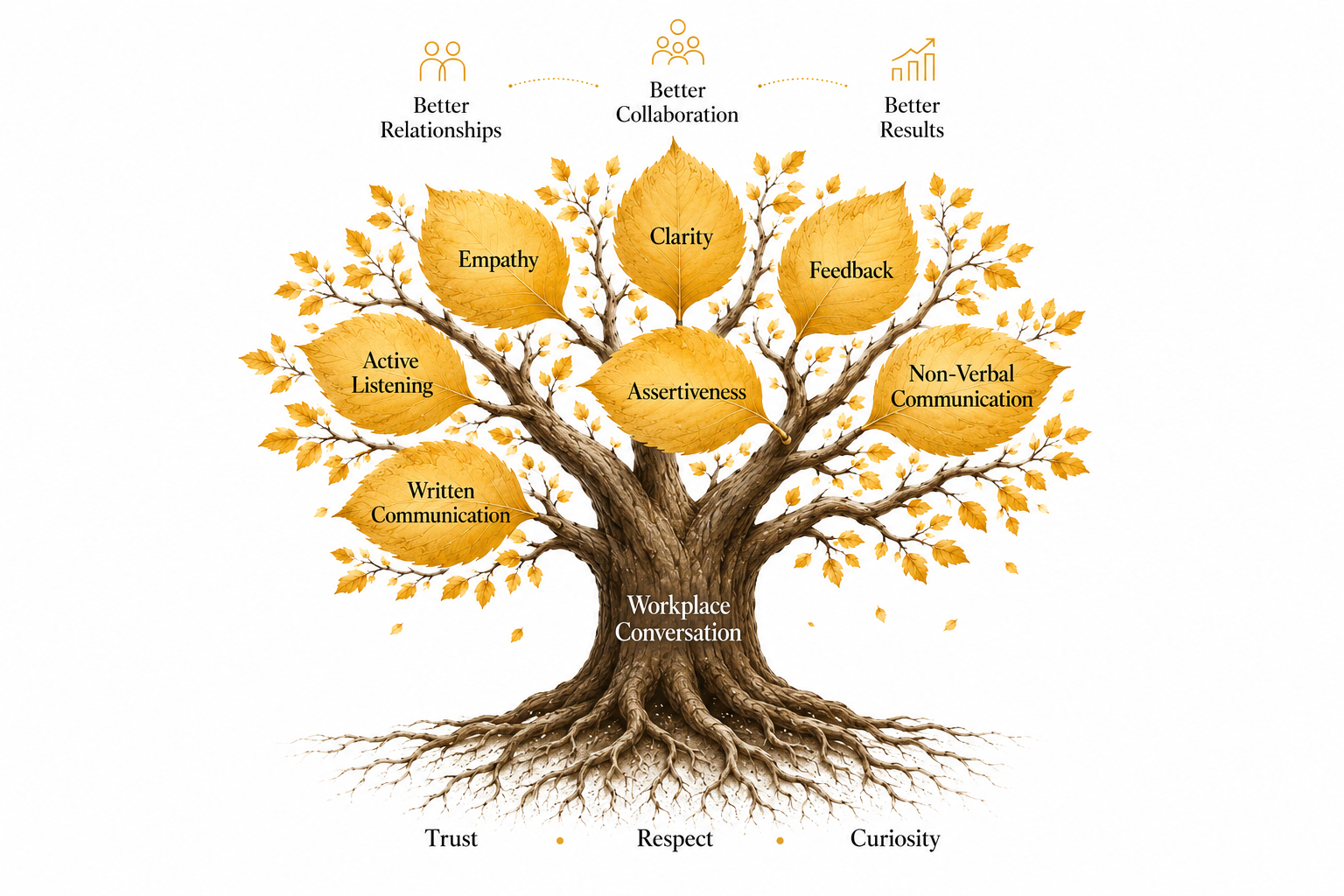
The answer is simple. Effective communication skills at work go far beyond speaking fluently or writing a good email. They include how well you listen, how clearly you express your thoughts, how confidently you handle difficult conversations and even what your body language communicates before you say a single word.
The good news is that communication is a skill that can be learnt, practised and refined over time. Whether you are leading a team, collaborating with colleagues or interacting with clients, mastering the right communication skills can transform the way you work and the relationships you build.
In this blog, we will look at seven effective communication skills that every professional should develop over time.
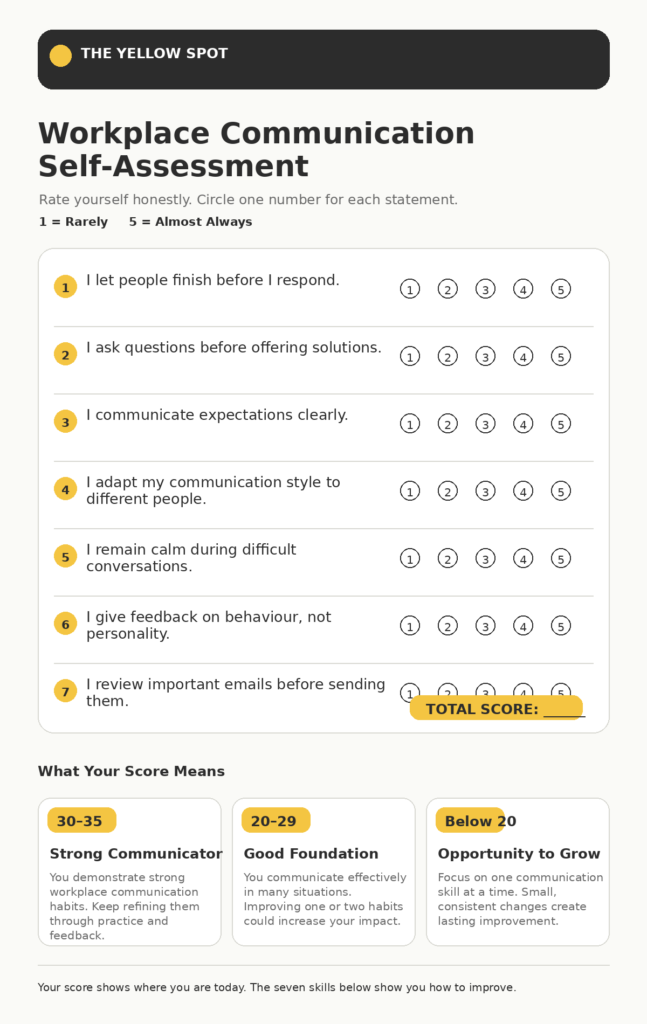
Effective communication skills are the abilities that help you share your thoughts clearly, understand others accurately and build meaningful connections through every interaction. They ensure your message is not only heard but understood in the way you intended.
Many people think communication is simply about speaking well. In reality, it is much more than that. It is about how attentively you listen, how clearly you organise your thoughts, how confidently you express your views, how you respond when conversations become difficult and how aware you are of the emotions and reactions of the people around you. In other words, effective communication is as much about making people feel heard and respected as it is about getting your own message across.
Your facial expressions, posture, gestures, tone of voice and even your silence influence how your message is received. Think of the difference between a manager saying, “Good job,” while smiling and making eye contact versus saying the exact same words while looking at their laptop. The words are identical, but the message feels completely different. People do not just hear what you say, they also notice how you say it.
Think about the people you enjoy working with. Chances are, it is not because they always have the perfect words. It is because they listen without interrupting, make you feel comfortable sharing your thoughts and respond in a way that builds trust. That is what effective communication in the workplace looks like and it is a skill that can be developed with conscious practice.
Whether you are a new employee or an experienced leader, these are the communication skills that make the biggest difference at work. The good news is that none of them are inborn talents. They can all be learnt and improved with practice.
You may have experienced this – you were talking to someone and they seemed to be listening. But the moment you stopped talking, they replied with something that had very little to do with what you just said? It happens more often than we realise.
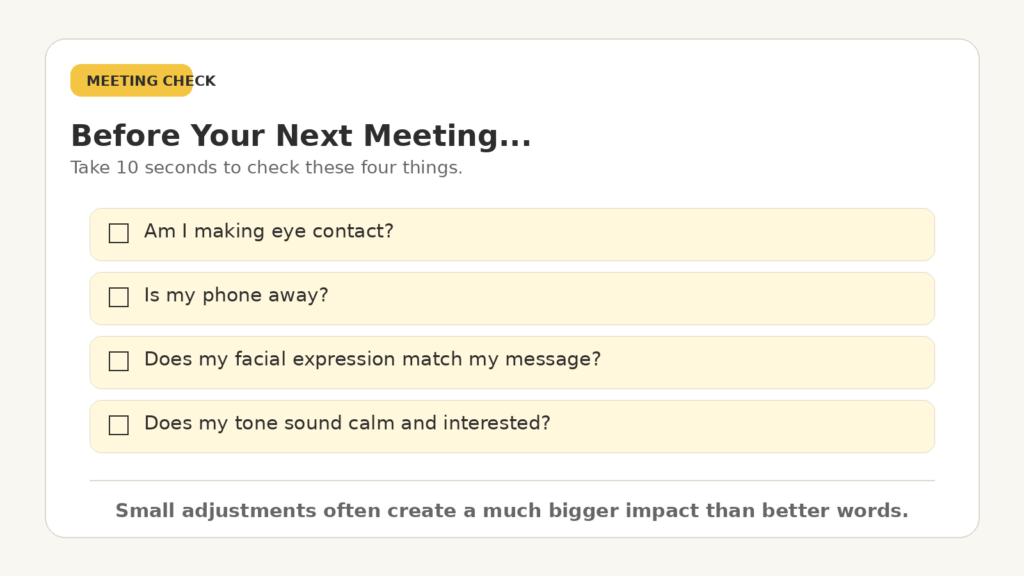
The reason is simple. Most of us are not really listening. We are busy preparing our response while the other person is still speaking.
That is the difference between hearing and active listening.
Active listening means giving the speaker your full attention, avoiding distractions, not interrupting and asking questions to make sure you have understood correctly.
Imagine a team member saying they are struggling to meet a deadline. A manager who immediately starts offering solutions may miss the real issue.
But a manager who first asks, “What is making it difficult?” is far more likely to uncover the real issue before offering a solution.
So, the next time someone is speaking, make it your goal to understand rather than respond. You will be surprised how much more you hear.
Have you ever received a message that simply said, “OK.” and wondered whether the person was annoyed, upset or perfectly fine? The words were simple, yet you were left trying to guess what they really meant.
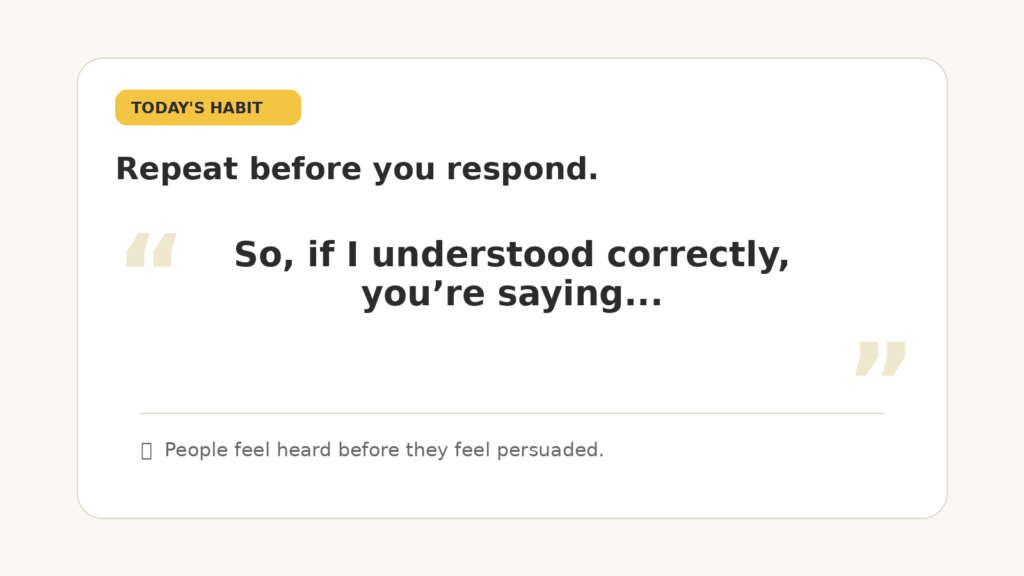
The same thing happens in face-to-face conversations. People do not just pay attention to your words. They also notice your facial expressions, posture, gestures, eye contact and tone of voice. These non-verbal cues often influence how your message is interpreted.
Imagine you go to your boss to clarify something. They say, “I have time, go ahead,” but keep looking at their watch. Would you really feel comfortable continuing the conversation? Their words say one thing, but their body language says something completely different.
The key is to make sure your non-verbal communication matches your words. Maintain eye contact, avoid distractions and be mindful of your tone. These small changes can make people feel heard, respected and more willing to engage with you.
Remember, people may forget your exact words, but they rarely forget how you made them feel.
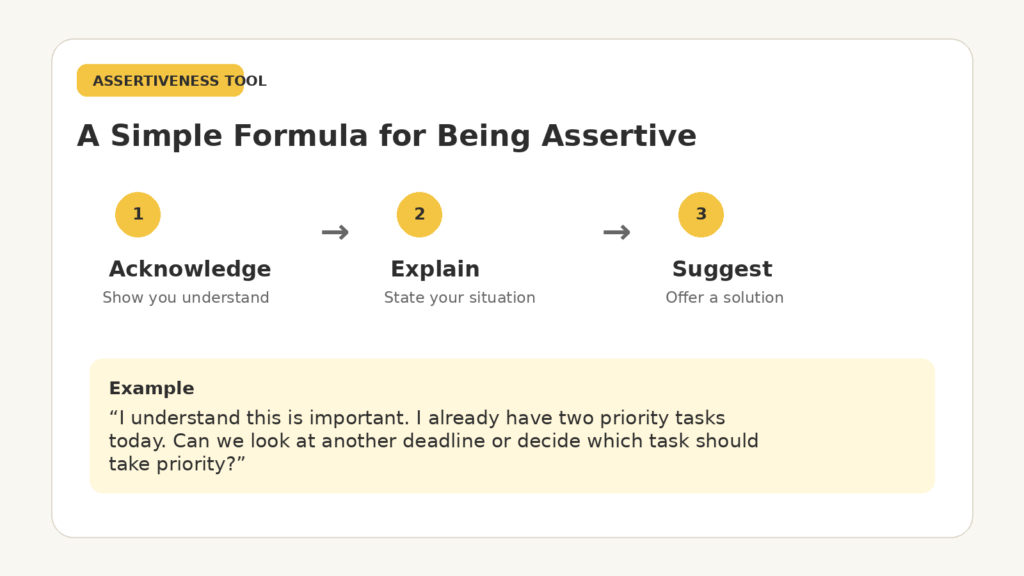
Assertiveness at work is often misunderstood. Many people hesitate to speak up because they fear they will come across as rude or aggressive. So, they stay quiet, agree to things they do not want to do or avoid difficult conversations altogether.
Assertiveness is about finding the balance. It is the ability to express your thoughts, opinions and concerns confidently while still being respectful of the other person.
For example, if a colleague asks you to take on another task when your plate is already full, instead of saying “yes” reluctantly or reacting with irritation, you could say, “I would like to help, but I am currently working on two priority tasks. Can we look at another timeline or find an alternative?”
Being assertive helps you set healthy boundaries, build mutual respect and have conversations that are honest without becoming confrontational.
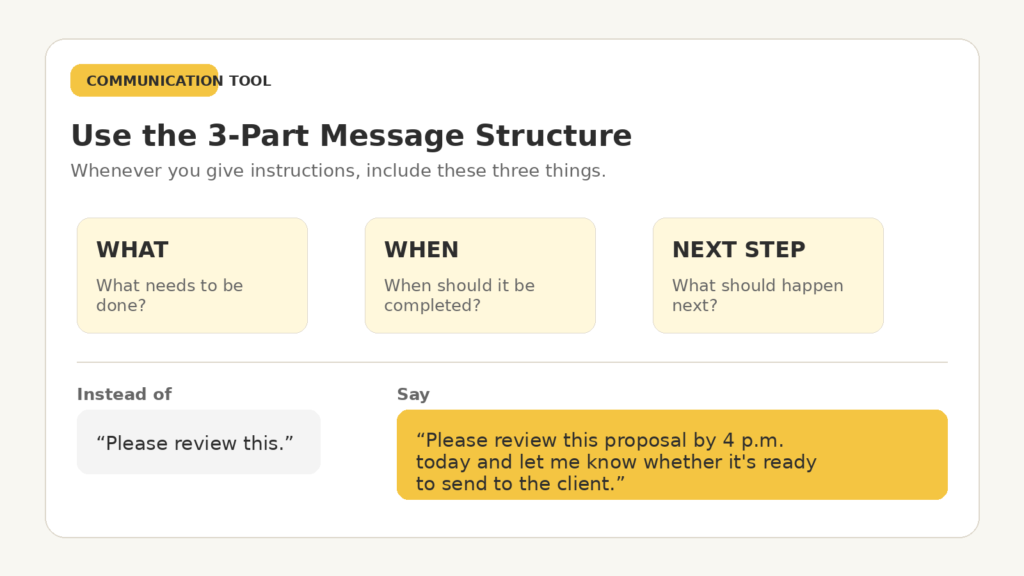
You walked out of a meeting wondering, “So… what exactly are we supposed to do?” Chances are, the discussion was long but the message was not clear.
One of the most important skills for effective communication is being able to say what you mean without making the other person work to understand it.
For example, instead of saying, “Whenever you get some time, could you possibly have a look at this?” say, “Could you review this by 4 p.m. today?” The second message is clear, specific and leaves no room for confusion.
A simple way to communicate effectively is to ask yourself one question before you speak or write: What is the one thing I want the other person to understand or do? If that is clear in your mind, your message is likely to be clear for them too.
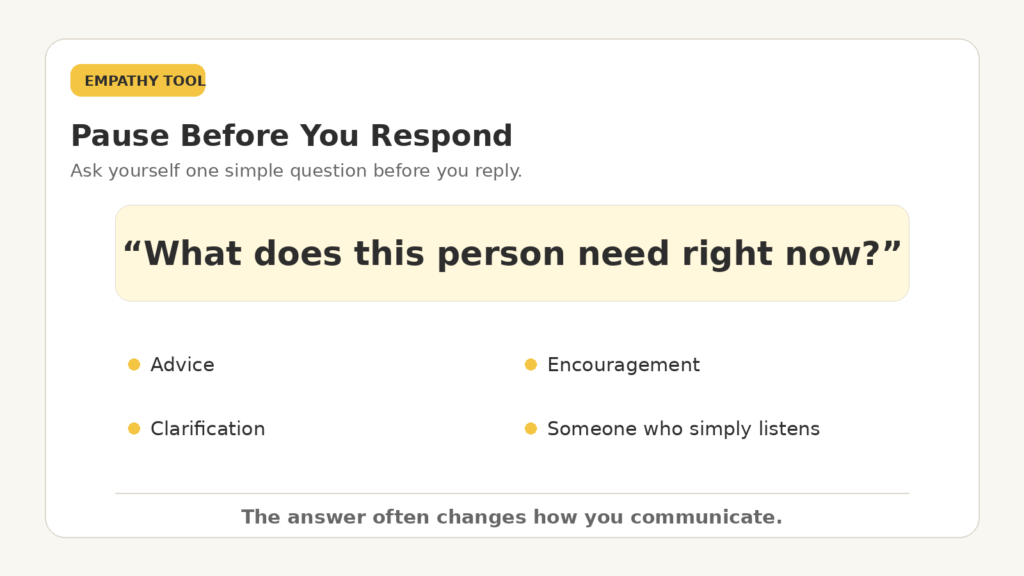
Two of your friends came to you with the exact same problem. One wants your advice straight away. The other simply wants someone to listen. If you respond to both of them in the same way, one of them is likely to walk away feeling unheard.
With the first friend, you might say, “Here is what I think you should do.” With the second, you may simply listen, ask a few questions and say, “I can understand why you feel that way.” The problem is the same, but your approach is different because their needs are different.
That is what empathy in communication is all about. It is not about changing your message. It is about understanding the other person’s perspective and adapting the way you communicate.
Before responding, pause and ask yourself, “If I were in their place, what would I need right now?” That one question can completely change the tone of your conversation.
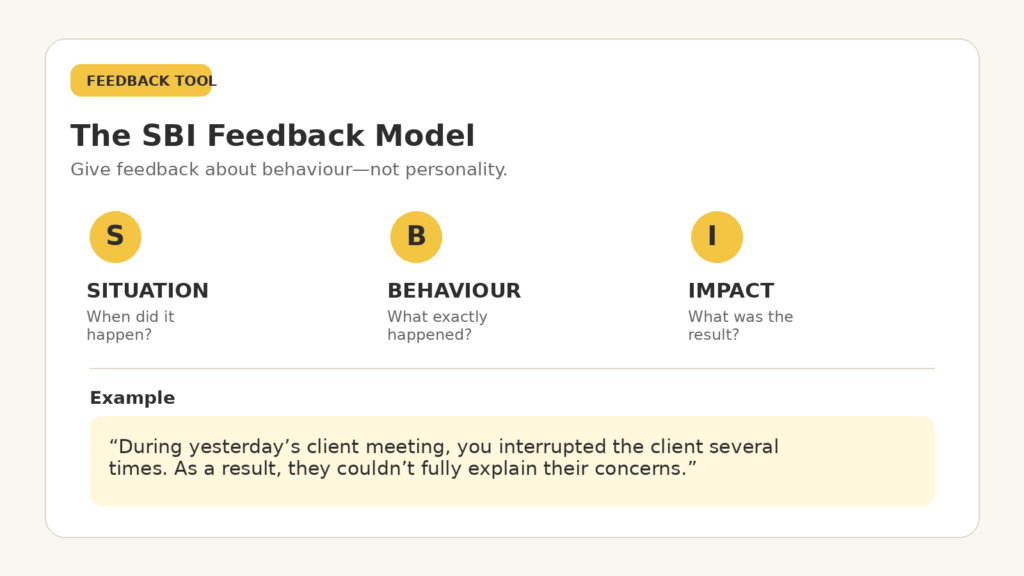
Remember the last time someone gave you feedback. Did it motivate you to improve or make you feel defensive? The difference often lies in how the feedback is communicated.
Good feedback is specific, timely and focused on behaviour rather than the person. Instead of saying, “You are always careless,” say, “There were a few errors in the work yesterday. Let’s go through them together so we can avoid them next time.” The first attacks the person. The second addresses the issue.
Receiving feedback is just as important. Instead of immediately explaining or defending yourself, take a moment to understand the other person’s perspective.
When feedback is given with the intention to help and received with an open mind, it becomes one of the most powerful communication skills at work.
Much of the workplace communication today happens through emails, instant messages and virtual meetings. The challenge is that unlike face-to-face conversations, your reader cannot see your facial expressions or hear your tone of voice.
A short reply like, “Fine.” or “Let’s discuss.” can come across as cold or annoyed, even when that was never the intention. That is why it is important to be clear, concise and mindful of your tone while communicating in writing.
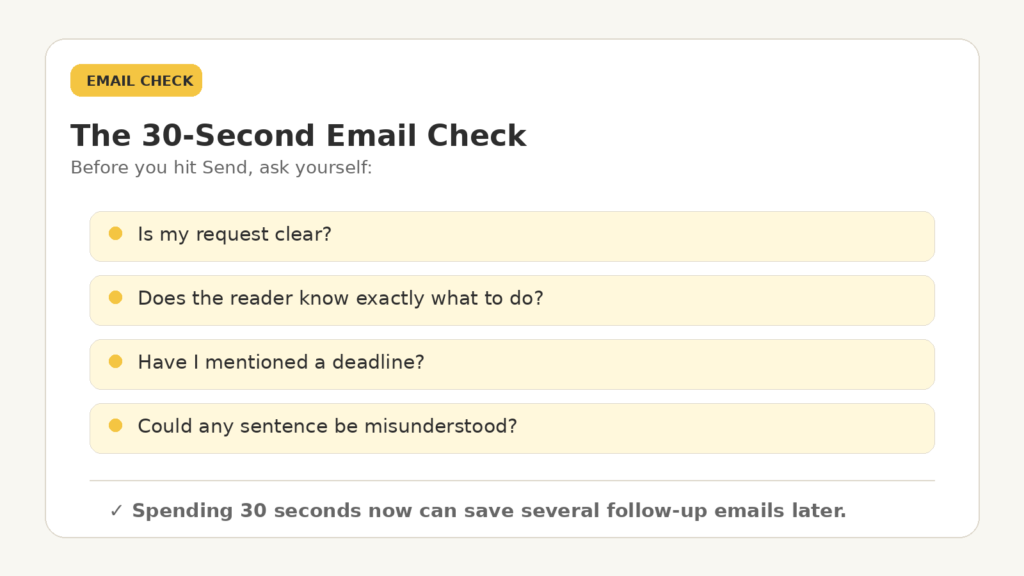
Before you hit send, read your message once from the recipient’s perspective. Is your request clear? Could any part of it be misunderstood? A quick review takes only a few seconds but can save a lot of confusion later.
Reading about communication can help you understand the principles, but improvement comes through practice. Just like learning to drive or swim, confidence develops by doing rather than simply reading. Every conversation gives you an opportunity to improve.
Good communication skills training is not about sitting through presentations and taking notes. It is about experiencing real workplace situations in a safe environment and learning from them.
At The Yellow Spot, we use activities, role plays, discussions and real-life scenarios because that is how people learn best. Participants get an opportunity to practise new approaches, receive feedback and reflect on what worked and what did not. They return to work not just with ideas, but with the confidence to apply them.
Yes, absolutely. Effective communication skills are learnt, not inherited. Like any other skill, they improve with awareness, practice and consistent feedback.
We see this in almost every communication skills programme. Quiet participants gradually find their voice, managers become better listeners, difficult conversations become easier.
The key is to practise these skills in realistic workplace situations where people can experiment, receive feedback and build confidence.
The best communicators are not those who always know the right thing to say. They are the ones who never stop learning how to say it better.
Start with one skill this week. Practice it consistently and notice how your workplace conversations begin to change.
