Team Building Explained: Process, Types & Benefits
Published: April 23, 2026
Last Updated: August 26, 2026
Every organisation wants to be high-performing. However high performance does not happen by accident. It has to be built, deliberately and consistently within its people specially. That is where a team building workshop come in.
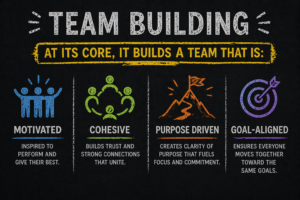
A Team building workshop is not just about offsite, fun activities, parties or games. At its core, it is a serious process that helps individuals function as a motivated, cohesive, a purpose driven and a goal-aligned unit. Whether you are onboarding a new project, navigating conflict, or dealing with a major business challenge, team building is the lever that transforms a group of people into a strong team which becomes capable to deliver during these times.
In this article, we explore the definition of team building, its objectives, the step-by-step process, types of activities, advantages, and the role of HR and Leaders in making it work.
Team building is a collective process of developing trust, improving communication, aligning goals, and strengthening relationships amongst the team members so they can work together more effectively towards shared outcomes.
In organisational behaviour, team building refers to a range of actions, activities and interventions designed to improve the dynamics between the members, enhance collaboration, and overall performance.
A simple team building meaning: it is the ongoing effort to turn a group of individuals into a unified, productive, and engaged team.
Team building is not a one-time event. It is a continuous investment in people and relationships — one that pays dividends in productivity, morale, and business outcomes.
Understanding what team building sets out to achieve is essential before designing any intervention. The primary objectives include:
Teams cannot function without trust. Team building creates structured opportunities for members to understand each other’s strengths and working styles, laying the foundation for psychological safety.
Poor communication is one of the leading causes of team dysfunction. Team building workshop helps break down barriers and build habits of clarity and active listening.
A strong team is one where every member knows what they own. Team building surfaces ambiguity and aligns expectations around roles and responsibilities.
Conflict is natural in any team. Team building provides a safe environment for addressing friction constructively before it damages relationships.
Employees who feel connected to their team are more motivated and more likely to go the extra mile. Team building directly impacts engagement.
A good Team building workshop ensures everyone is working toward the same outcomes, not just their individual targets.
What are team building workshop activities? There are several categories, each serving a different purpose:
Exercises focused on listening, clarity, and giving and receiving feedback. Structured dialogues and feedback circles are common formats.
Challenges that require teams to think collectively and creatively, such as simulations, case studies, and scenario-based games.
Designed to build psychological safety and mutual reliance among team members.
Focused interventions that develop specific competencies like conflict resolution, collaboration, or leadership. These deliver the most lasting value in a corporate context.
With remote and hybrid teams becoming the norm, online games, digital workshops, and collaborative challenges have become essential formats for distributed teams.
Understanding the process of team building is critical to making it effective rather than merely entertaining.
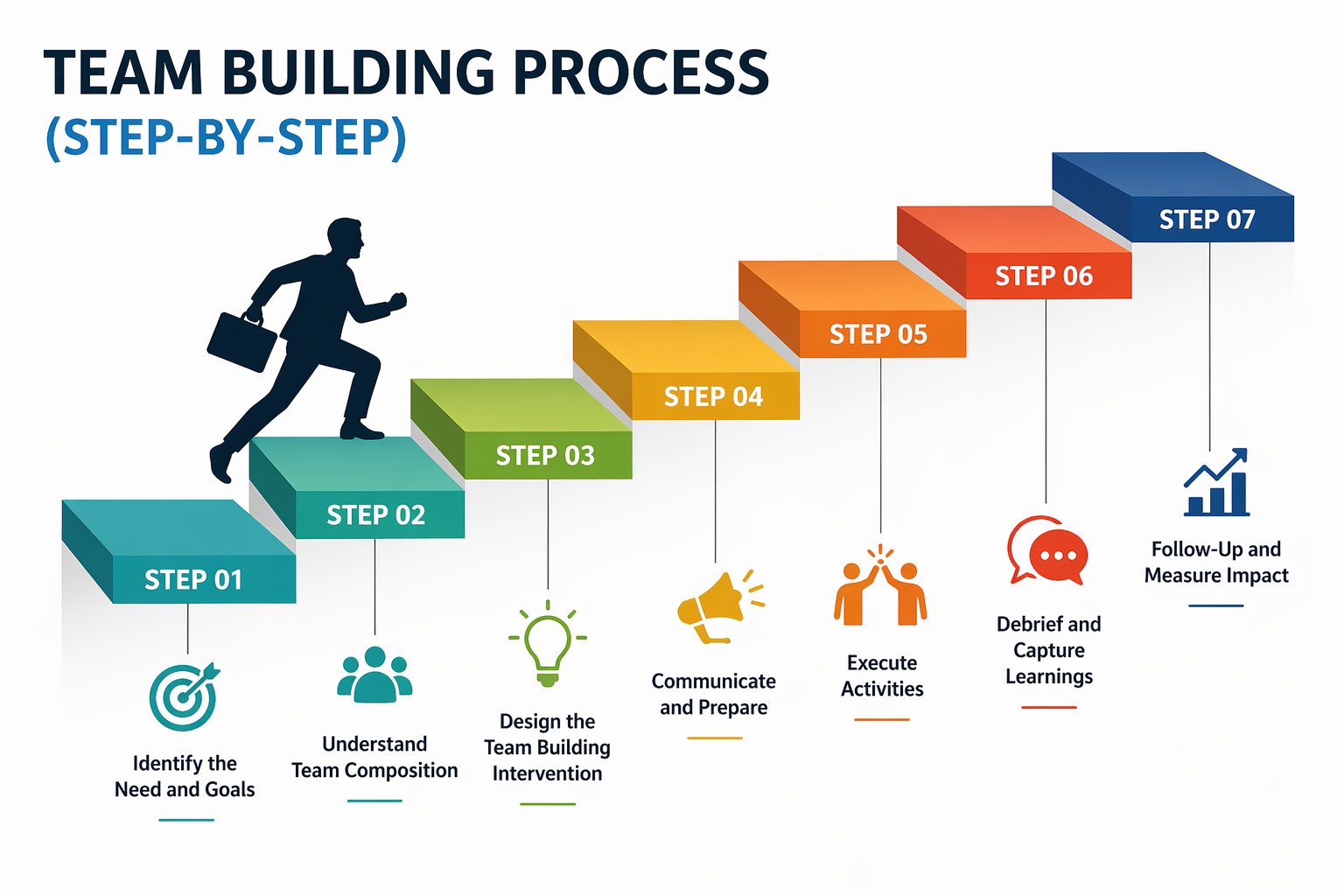
Every effective intervention begins with a clear diagnosis. What is the team struggling with — trust, communication, conflict, or misaligned goals? Define specific outcomes before designing any activity.
No two teams are the same. Assess the team’s size, diversity, tenure, and current dynamics. This ensures the intervention is relevant and well-received.
Based on the diagnosis and team profile, design an appropriate intervention — from a half-day workshop to a multi-day offsite or a long-term training journey. Activities must serve the goals, not the other way around.
How you position the programme matters. Communicate the purpose clearly to participants. When people understand the why, they engage more authentically.
Facilitate with skilled facilitators who can read the room, manage group dynamics, and draw out meaningful insights. Execution quality directly determines outcomes.
The debrief is where real learning happens. A well-facilitated debrief connects the activity experience to actual workplace behaviours and challenges. Without it, even the most engaging activity remains just a fun experience.
Team building without follow-up does not stick. Measure outcomes against the goals set in Step 1. Check in with teams at 30, 60, and 90 days and reinforce key learnings through manager support.
The importance of teamwork is well established in research and practice. Here is a breakdown of the key advantages:
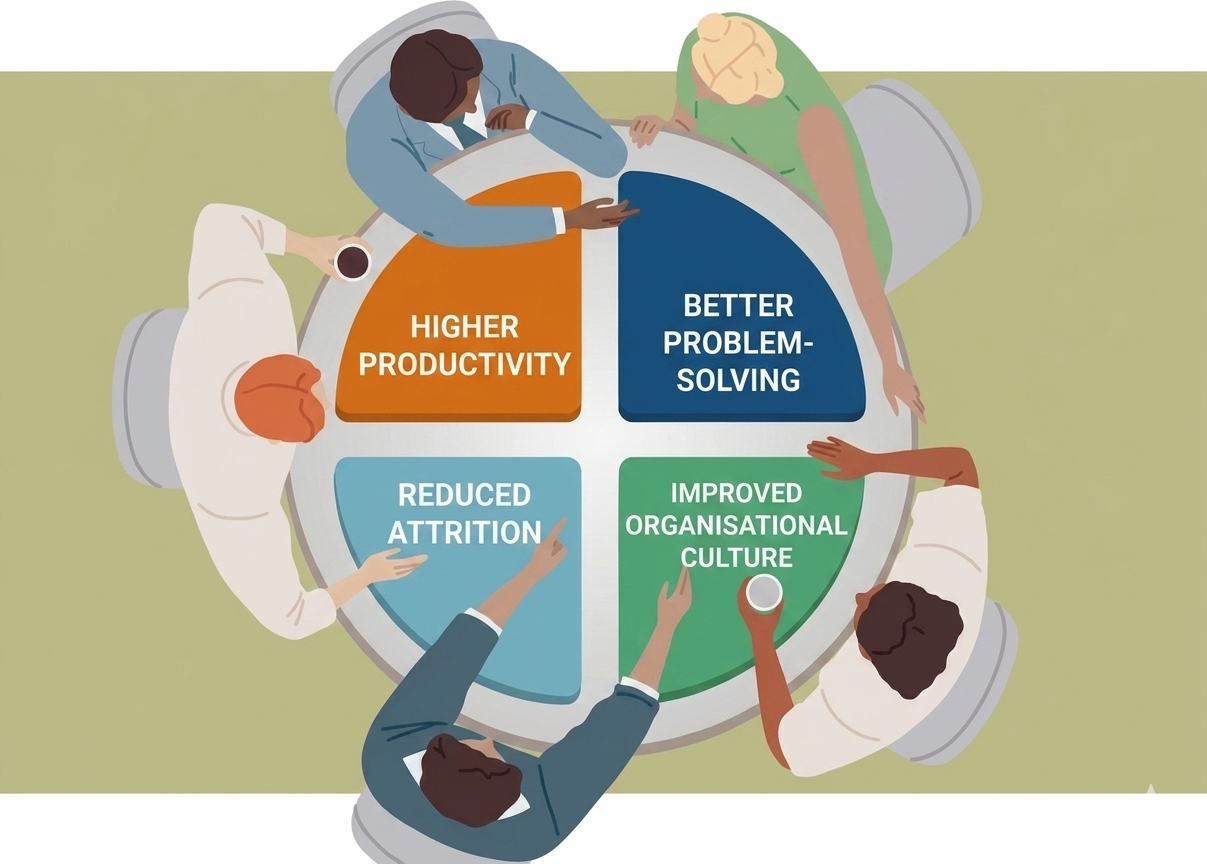
Teams that collaborate well produce more with less friction. When roles are clear and communication flows freely, work gets done faster and better.
Diverse perspectives, channelled effectively through team building, lead to more creative and robust solutions.
People stay where they feel connected. Strong teams reduce turnover and the associated costs of hiring and onboarding.
Team building in organisational behaviour is one of the most direct levers for shaping a high-trust, high-performance culture.
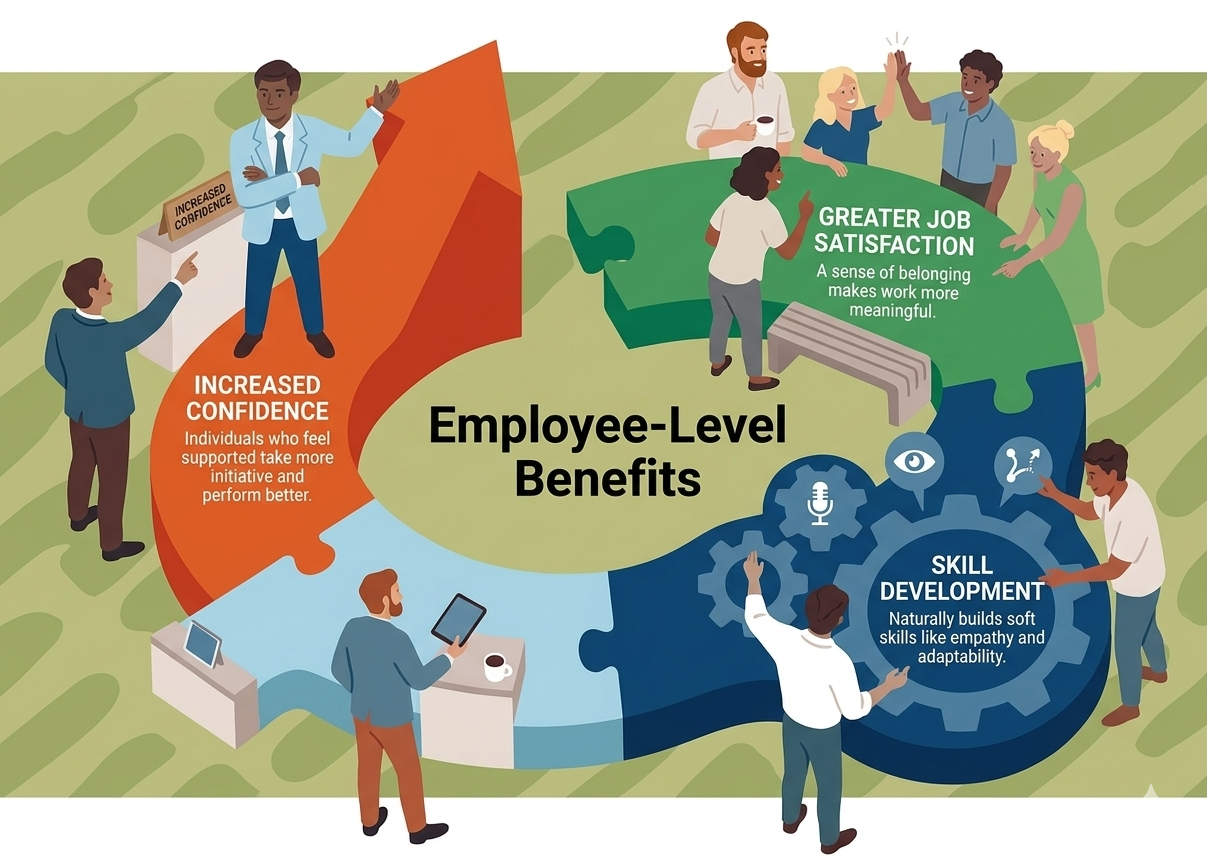
Individuals who feel supported by their team take more initiative and perform better individually.
A sense of belonging and camaraderie makes work more meaningful and enjoyable.
Team building naturally builds soft skills like empathy, communication, and adaptability.
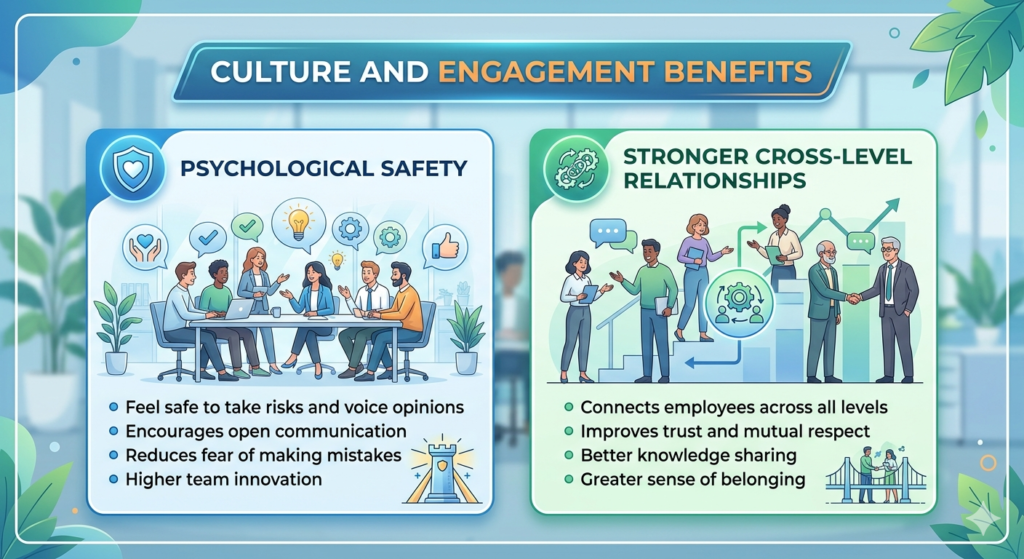
Teams that have gone through intentional team building tend to speak up more, take more risks, and recover faster from setbacks.
Leadership and team building go hand in hand. When leaders participate authentically, it breaks hierarchical barriers and humanises leadership.
A balanced view acknowledges that team building is not without its challenges:
A single team outing does not build a team. Without continuity and follow-through, the impact fades quickly.
Activities that feel mandatory or poorly designed can damage trust rather than build it. Facilitation quality matters enormously.
If the real issue is structural or a leadership problem, no amount of team building will fix it. Accurate diagnosis is essential before any intervention.
HR and managers are the architects of team building in any organisation. HR’s role is to identify needs, design or commission appropriate interventions, partner with capable training providers, and measure impact over time.
Managers play an equally critical role. A manager who models the behaviours team building aims to develop — trust, openness, accountability, and collaboration — makes every intervention more effective. Conversely, a manager who undermines team dynamics outside the workshop will neutralise any gains made inside it.
The best outcomes happen when HR and managers work in partnership, treating team building not as an event but as a sustained leadership and culture strategy.
Team building is the process of developing trust, improving communication, and strengthening relationships among team members so they can work together more effectively toward shared goals.
To improve how a group collaborates, communicates, and performs together — turning individuals into a cohesive, high-performing team.
Advantages include higher productivity, stronger morale, better communication, and reduced attrition. Challenges include one-off events having little lasting impact and difficulty measuring ROI.
Best practice suggests at least quarterly touchpoints, with more intensive interventions annually or during periods of significant team change.
By creating shared experiences, building interpersonal trust, and modelling desired behaviours, team building makes culture tangible rather than aspirational.
At The Yellow Spot, we design and facilitate team building experiences grounded in behavioural science, tailored to your team’s specific challenges, and built for lasting impact. Explore our programmes today.
