
5 Negotiation Skills That Will Change How You Work, Lead and Live
Published: June 18, 2026

There is atleast one negotiation most of us have either avoided or handled poorly at some point.
A salary discussion we backed down from too quickly, a vendor deal we walked away from without really pushing, a team conflict we sidestepped because it felt easier than having the actual conversation.
And in hindsight most of us know exactly what we should have said. We just didn’t say it.
Negotiation is not a skill only meant for lawyers at settlement tables or senior leaders closing big deals. It plays out every single day. In performance reviews, client conversations, project timelines, internal disagreements and even in how responsibilities get divided at home.
The people who handle these moments well are not necessarily smarter. They have simply learned and practiced a set of skills that most of us were never formally taught.
We spend years building technical knowledge and management frameworks, but negotiation? Most people pick it up through trial and error and the occasional uncomfortable memory. Recognising this is itself the starting point.
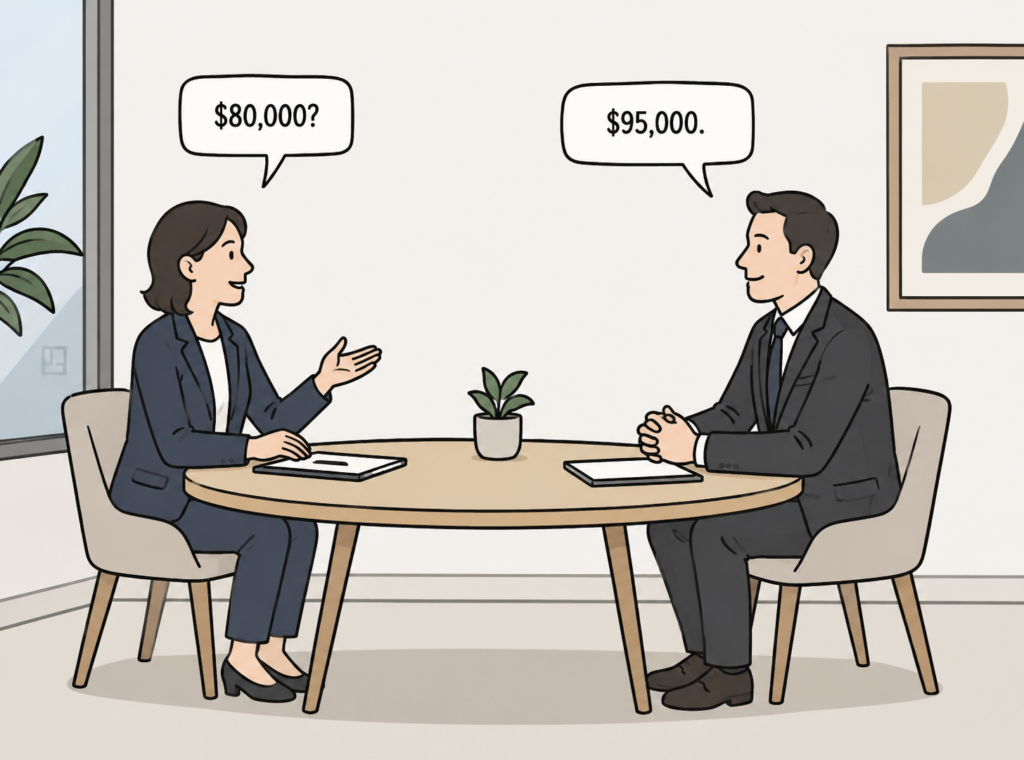
A study in the journal of organizational behaviour found that professionals who negotiate their first salary earn on average $5,000 more per year and that gap compounds over a career. The world economic forum lists negotiation among the top ten skills for the future of work. Yet fewer than 37% of professionals feel genuinely confident negotiating according to a LinkedIn learning survey.
The gap between how important this skill is and how few people have built it. That is exactly where the opportunity sits.
Before the five skills, two pieces of vocabulary worth knowing.
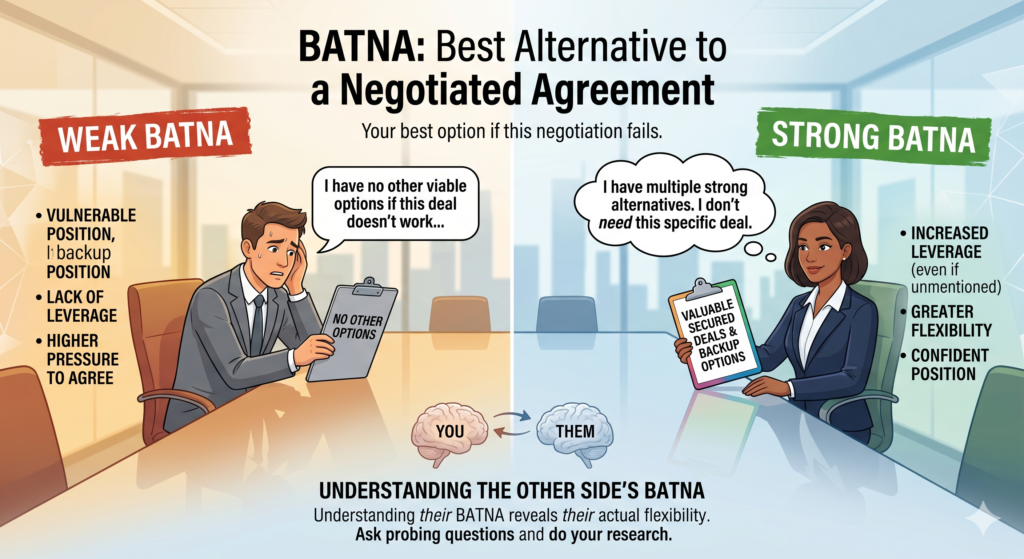
Coined by roger fisher and william ury in getting to yes, your BATNA is simply your best option if this negotiation fails. A weak BATNA puts you in a vulnerable position. A strong one gives you leverage even if you never mention it. The other side has a BATNA too and understanding theirs tells you how much flexibility they actually have.
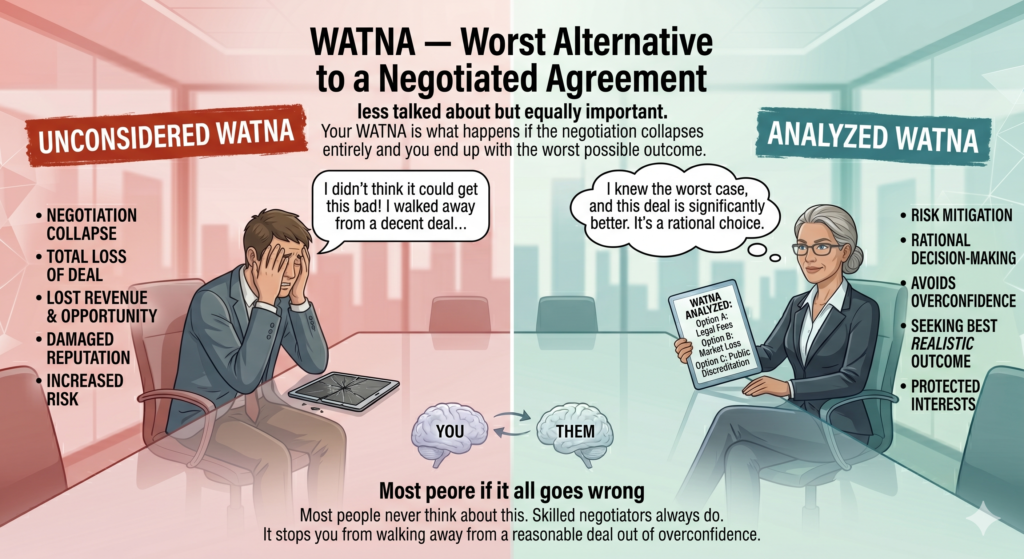
Less talked about but equally important. Your WATNA is what happens if the negotiation collapses entirely and you end up with the worst possible outcome. Most people never think about this. Skilled negotiators always do. It stops you from walking away from a reasonable deal out of overconfidence.
One more term worth keeping in mind. Positions are what people say they want. Interests are why they want it. Skilled negotiators work at the level of interests, which opens up far more room to move.
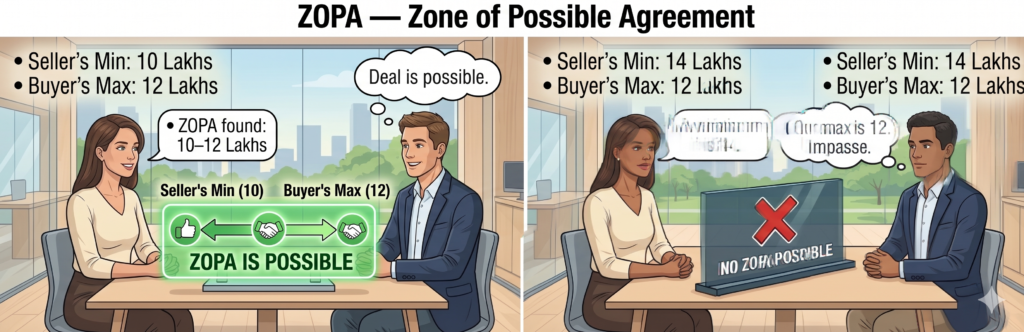
The range within which a deal can actually happen. If your minimum is 10 lakhs and their maximum is 12 lakhs, a deal exists somewhere in that window. If your minimum is 14 lakhs and their ceiling is 12 lakhs, there is no ZOPA and no amount of persuasion will create one.
This 10 question assessment is built around three things research consistently links to negotiation effectiveness. Preparation, execution and communication, and emotional regulation under pressure.
Rate each statement from 1 (rarely) to 5 (consistently).
Before any significant negotiation i define three things clearly. My ideal outcome, my acceptable minimum and the point at which i walk away.
I think through what the other party actually wants, not just what they are asking for but the reason behind their position.
I know my BATNA before i walk in, and i have thought about what their BATNA might be too.
I think about my WATNA. What actually happens if this falls apart completely. I use that to calibrate how much risk i am willing to take.
I try to map the realistic ZOPA before the conversation starts, not after it is already underway.
In high stakes conversations i ask more questions than i make statements.
I make the first offer when i am prepared and have a justification for it.
When there are multiple issues on the table i look for trade offs, things that cost me little but matter a great deal to them and vice versa.
When a negotiation becomes tense or hits a deadlock i stay functional. I do not freeze, over concede or get pulled into positional arguments.
I can separate how i feel about the person from the outcome i need. I can be firm without being cold.
42 to 50. You negotiate with structure and self awareness.
28 to 41. Solid instincts but uneven execution. One construct is likely pulling your average down.
17 to 27. Negotiation is probably a source of discomfort. Every skill here is learnable.
Below 17. You are leaving real value on the table, not because of ability but because no one ever taught you this properly.
Most negotiations are lost before they begin, not in the room but in the absence of preparation before it. Work through these before any significant discussion. What is my ideal outcome. What is my reservation point. What is my BATNA and WATNA. What do i think their BATNA is. What are their underlying interests. Where does the ZOPA realistically sit. This is the difference between responding thoughtfully and reacting emotionally.
The most consistent finding across negotiation research is that the best negotiators talk less and listen more. Ask open ended questions. Help me understand what is driving that number opens more doors than why do you want that. Reflect and paraphrase so the other person knows you have genuinely heard them. Tolerate silence. Most people rush to fill pauses. The other party often gives away important information when you simply stay quiet. Chris voss former FBI lead hostage negotiator calls this tactical empathy. When people feel genuinely heard they become more open.
The first number on the table has a powerful psychological pull. Research by adam galinsky at columbia business school shows the initial anchor shapes the entire negotiation even when both parties know it is an opening move. Make the first offer when you have done your homework. Anchor ambitiously but not absurdly, and back it with objective criteria like market rates or precedent. When the other side anchors first do not counter automatically. Acknowledge it then reframe toward your own reference point.
Most people treat negotiation as a fixed sum game. It is rarely that simple. A vendor might care deeply about payment timelines but be flexible on scope. A candidate might value title over base salary. Identify all the issues on the table not just the headline number. Ask what would make this a better deal for you. The answer often reveals something you can offer at low cost to yourself. Look for shared interests beneath opposing positions. Two teams fighting over project ownership might both share the same underlying interest which is visibility with leadership. That is solvable without anyone losing.
Negotiations derail far more often because of emotional breakdowns than logical ones. Anger, ego and overconfidence are responsible for more broken deals than any strategic error. Name the emotion to reduce its intensity. Research by matthew lieberman at UCLA shows that labelling an emotional state in yourself or the other person measurably reduces its grip. It sounds like you are frustrated with how this has been handled can de escalate faster than any counter argument. Take a break intentionally when a conversation becomes charged, a 10 minute pause is strategy not weakness. And watch for reactive devaluation, the tendency to dismiss a proposal simply because the other side made it.
Priya is a mid level marketing manager four years into her role, with an external offer on the table at 18% above her current CTC.
Before walking in to speak with HR she did something most people skip. She prepared properly.
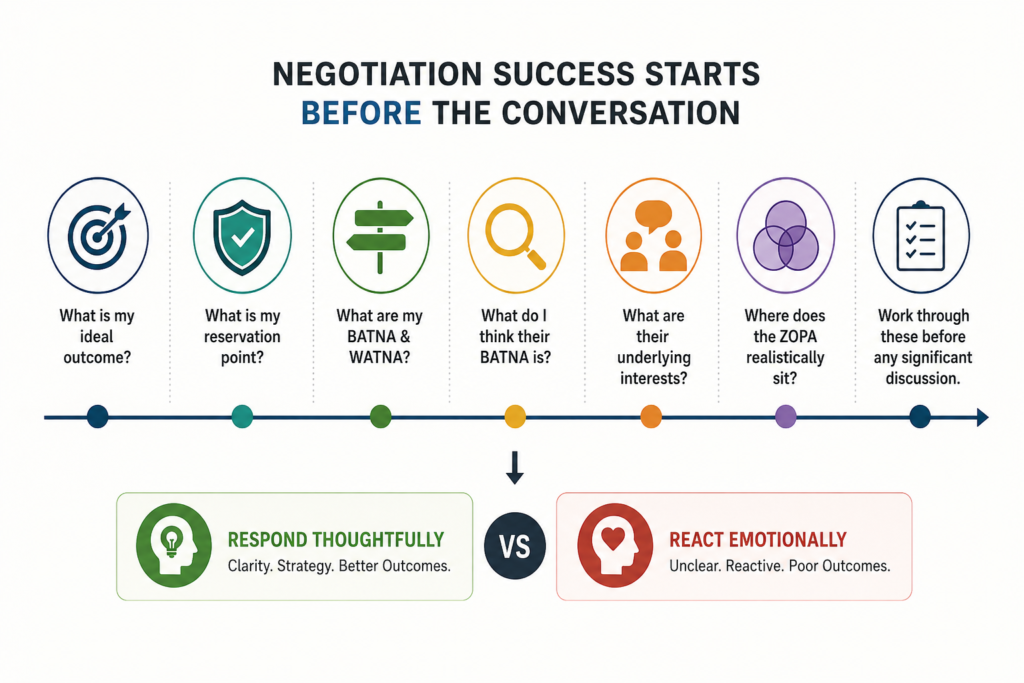
Her BATNA was real and solid, the competitor offer. She did not need to bluff. Her WATNA was staying put with no raise and growing resentment. She mapped the ZOPA. Current salary 14 lakhs, target 18 lakhs, external offer 16.5 lakhs, estimated internal ceiling around 17 lakhs. She also identified what mattered beyond the number, a clear promotion timeline and the autonomy to lead a new campaign.
In the room she did not lead with the competitor offer as a threat. She opened with her contributions over the last 18 months, anchored at 17.5 lakhs with a clear rationale and asked what she would need to demonstrate to get there.
The outcome was 17 lakhs, a title revision and a six month promotion review commitment.
She won because she was prepared, knew her alternatives on both ends, identified the ZOPA and worked at the level of interests and not just positions.
Reading about negotiation and doing it well are two very different things. The gap between them is practice. Structured, feedback rich and pressure tested.
A well designed program puts you in live simulations where you feel the pressure, make mistakes and recalibrate in real time. It surfaces the specific habits that hold you back, not generic ones. And it builds a shared language across your team so everyone negotiates from the same framework.
At the yellow spot we have facilitated negotiation programs for professionals across industries. Sales and procurement teams, senior leaders, first time managers and everyone in between. Our approach combines frameworks with real world role plays so participants leave with skills they actually use.
If you are looking at building negotiation capability in your team we would be glad to design something that fits your context. Write to us or call us.
The yellow spot is a mumbai based corporate training and L&D company with 16 years of experience in leadership, soft skills, sales effectiveness and people development. We work with organisations across india, the UAE, mauritius and malaysia.
